








Smartphones
Tablets
Audio
Wearables
Accessories
About OPPO
ColorOS
Moving Beyond Flat: How Reno16 Series Creates a New Dimension in Smartphone Design
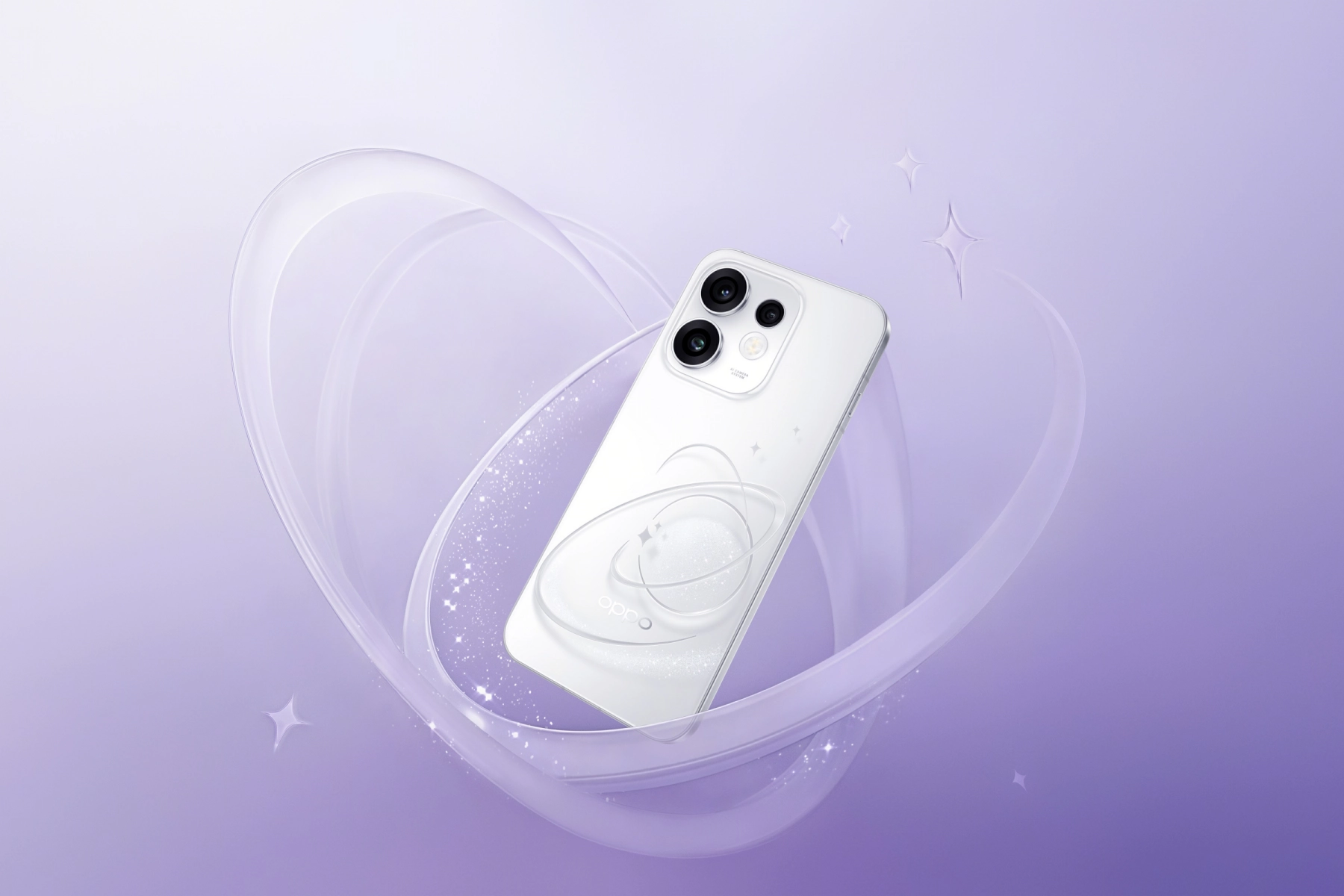
For years, the OPPO Reno Series has been exploring new possibilities in smartphone aesthetics, combining craftsmanship with distinctive visual identities. With the latest Reno16 Series, OPPO demonstrates that this pursuit goes beyond surface-level design, creating an aesthetic that seems to extend beyond the device itself and into real space.
Inspired by the idea that every individual is a vibrant world all their own, OPPO Reno16 Series was designed to reflect a generation that embraces curiosity, self-expression and multidimensional identities.
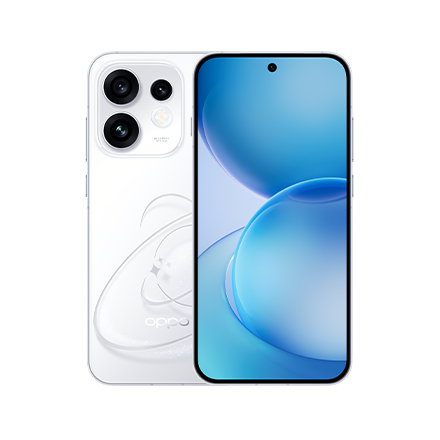
The result is the new 3D Pop Planet Design, which brings depth and dimensionality to smartphone aesthetics in a way that's both visual and personal. As the device moves in your hand, the image of a planet appears to float above the back cover, forming a striking naked-eye 3D effect.
HoloVerse 3D Technology: Millions of "Projectors" Working as One
Underlying the floating planet effect is OPPO's exclusive HoloVerse 3D Technology, which builds on optical imaging principles first introduced more than a century ago.
In 1908, the physicist Gabriel Lippmann proposed Integral Imaging, a method of recording and reconstructing three-dimensional light fields using microlens arrays. For decades, the concept remained largely confined to research environments due to the limitations of optical manufacturing, and it is only recent advances in nano-scale printing have made it possible to bring the technology to consumer products.
OPPO's 3D Pop Planet Design builds on the foundational principles of Integral Imaging. Imagine millions of microscopic projectors embedded beneath the phone's back cover, each consisting of a microlens, a substrate layer and a corresponding graphic pattern. The graphic pattern is made up of perspective-specific fragments of a complete 3D image of a planet, and as light passes through the microlens array, each lens contributes its own tiny fragment of the final image. Between them, these millions of precisely engineered micro-projectors reconstruct a complete image of planet that appears to float above the surface of the device, creating a striking sense of depth and dimensionality.
Although the floating planet itself creates a strong sense of depth, the effect becomes even more intriguing when illuminated. Shine a flashlight on the back cover and move the light around, and a shadow appears to shift naturally beneath the planet, reinforcing the impression of a three-dimensional object suspended in space.
The Challenge: Nanometer Precision
While the principle behind HoloVerse 3D Technology is relatively straightforward, manufacturing it at scale is anything but. Combining millions of microscopic optical elements into a seamless floating planet presents an extraordinary engineering challenge.
Similar optical effects have previously been used in highly specialized applications, most notably the MOTION security thread introduced on the 2013 U.S. $100 bill, where the number "100" and the Liberty Bell appear to move as the note is tilted.
The difference lies in repetition. Currency-grade MOTION technology relies on repeating units arranged in a uniform grid. Each unit consists of a microlens paired with a corresponding graphic pattern. Once a single unit is designed, it can be replicated across the entire surface.
But OPPO's 3D Pop Planet Design goes beyond this model entirely. Instead of repeating the same unit, it requires a continuous, non-repeating pattern array, one where every microlens corresponds to a unique micro-pattern. This demands advanced computational modeling capable of coordinating millions of unique optical elements into a single 3D image.
The challenge extends beyond design. Every micro-pattern must align precisely with its corresponding microlens. Even nanometer-scale misalignment can create visible defects in the final image. In other words, what appears to be a single floating image is actually the result of millions of uniquely engineered optical elements working in perfect alignment.
The Impossible Made Possible
Adapting a complex optical imaging technology for a mass-produced smartphone design required more than optical innovation alone. To bring the 3D Pop Planet Design to life, OPPO turned to Embedded Nano-Printing, an advanced manufacturing process capable of producing highly complex optical structures at microscopic scale.
Originally used in applications such as premium collectibles and anti-counterfeiting labels, the technology was designed primarily for relatively simple repeating patterns with limited perceived depth. The requirements of the 3D Pop Planet Design pushed the technology far beyond the simple repeating patterns it was originally designed to produce.
Working closely with industry partners, OPPO engineers refined the underlying optical structure and expanded the perceived floating depth to an industry-leading 15 millimeters while maintaining image clarity and stability. Extensive optimizations across the optical modeling, suspension height, line widths and structural parameters of the micro-pattern array were required to make the effect possible.
From the first design samples to final mass production, 3D Pop Planet Design underwent seven rounds of optimization. The engineering challenges were so great that early prototypes achieved a yield rate of just 1%, meaning only one out of every hundred pieces met quality standards. But through continuous refinement, OPPO ultimately increased production efficiency to 300 production-ready sheets per hour, transforming a highly complex optical concept into a commercially viable smartphone design.
Moving Beyond Flat
For decades, smartphone design has largely been confined to flat surfaces. Colors, textures and patterns evolved over time, but the way they were perceived remained fundamentally two-dimensional.
With the 3D Pop Planet Design, OPPO set out to challenge that limitation. Rather than simply decorating a surface, the design introduces a new sense of depth and dimensionality, representing a generation that embraces multidimensional identities and self-expression. In this sense, the design is more than an optical achievement. It is a new way of translating personal expression into physical form. For the Reno Series, it marks a new chapter in smartphone aesthetics—one that moves beyond the surface.