










One Trip, Several Perspectives: Can OPPO Find X9 Ultra Be a Best Zoom Camera Phone for Travel?
One Trip, Several Perspectives: Can OPPO Find X9 Ultra Be a Best Zoom Camera Phone for Travel?
Travel photography has a habit of making fixed focal lengths feel restrictive. One moment you are standing inside a narrow historic building where the scene barely fits into the frame. An hour later, the detail you want is across a lake, high on a façade or on the opposite side of a crowded street. Later still, you may want a portrait that feels intimate without holding the phone close to someone's face.
This is why the best zoom camera phone for a traveller is not necessarily the one with the largest maximum zoom figure. More useful is a camera system that offers distinct perspectives at distances people actually encounter on a trip.
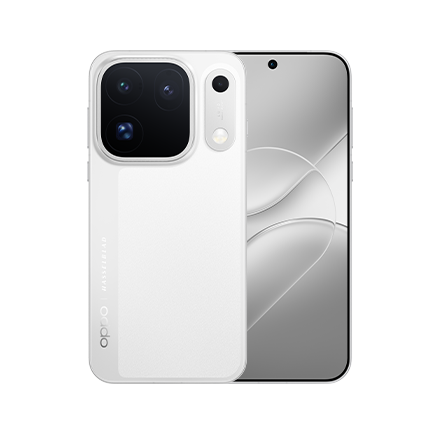
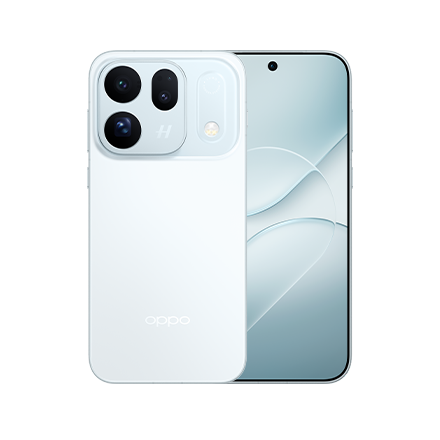
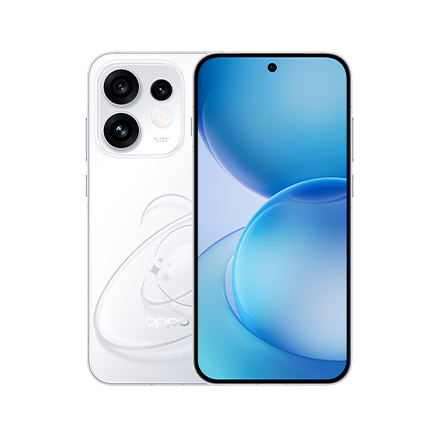
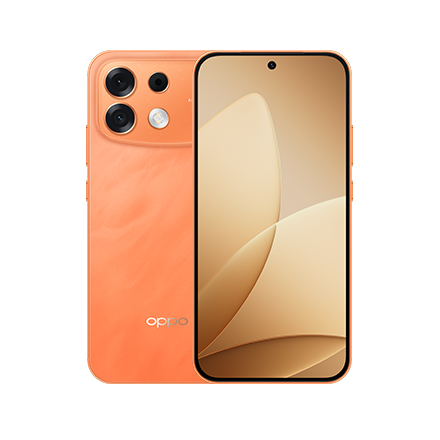
The OPPO Find X9 Ultra approaches that problem with cameras spanning ultra-wide, standard, medium telephoto and 10x optical telephoto positions. Its New-generation Hasselblad Master Camera System includes two high-resolution Hasselblad cameras at 23mm and 70mm, plus a dedicated Hasselblad 50MP 10x optical telephoto at 230mm.
Travel Photography Often Starts Wider Than You Think
At the wide end of the camera system, the main choice is how much of the setting to include. The 50MP ultra wide camera uses a 14mm equivalent focal length, a 123 degree field of view and an f/2.0 aperture, which suits interiors, nearby architecture and broad outdoor scenes.
The Hasselblad 200MP Ultra Sensing Main Camera provides a more familiar 23mm view. Its 1/1.12 inch sensor and f/1.5 aperture make it the everyday option for food, markets and street photography.
The ultra wide camera preserves more context, while the main camera gives individual subjects greater presence in the frame.
70mm Is the Quietly Useful Travel Focal Length
The 3x telephoto may be less dramatic on a specification sheet than 10x optical zoom, but it could be the focal length travellers use more frequently. OPPO's Hasselblad 200MP 3x Super Portrait Telephoto uses a 70mm equivalent focal length, a 1/1.28-inch sensor and an f/2.2 aperture. It also supports 2-axis OIS.
At 70mm, it becomes easier to separate one visual element from a busy scene. A traveller could pick out the patterns on a building, frame a portrait without standing uncomfortably close or remove distracting surroundings from a street composition. There is also less of the exaggerated wide-angle perspective that can occur when photographing a face from very close range.
In other words, 3x is not simply a stepping stone on the way to 10x. It has a distinct photographic role of its own.
Save 230mm for the Moments When Distance Is the Story
The Hasselblad 50MP 10x Ultra-Sensing Optical-Zoom Telephoto extends the optical focal length to 230mm. OPPO uses its Quintuple Prism Reflection Periscope Structure to fold the long optical path within the phone, while OPPO Telephoto Sensor Shift and 2-axis OIS help with high-magnification stability. That makes 10x relevant when moving closer is either impossible or undesirable.
At a wildlife reserve, maintaining distance may be essential. At a live performance, there may simply be no way to reach the stage. On a mountain journey, the subject might literally be kilometres away. Rather than using 10x for everything, the more natural travel workflow is to use it when distance itself is shaping the photograph.
A Consistent Look Across Different Places and Light
Travel also means constantly changing light. A morning street may have cool shade and warm sunlight in the same frame; indoor attractions can combine artificial sources with daylight from windows.
The New-Gen True Colour Camera uses 24 spectral channels and is designed to respond to shifting colour temperatures across the camera system. Hasselblad Natural Colour Solution and the LUMO Imaging Engine provide additional colour and computational processing.
For the traveller, the benefit is less about knowing the names of these technologies and more about consistency when moving between scenes and focal lengths.
OPPO also gives the OPPO Find X9 Ultra a 50MP autofocus front camera capable of 4K video at up to 60fps, so self-recorded travel content does not have to rely entirely on the rear cameras.
The Practical Side of Carrying One Device All Day
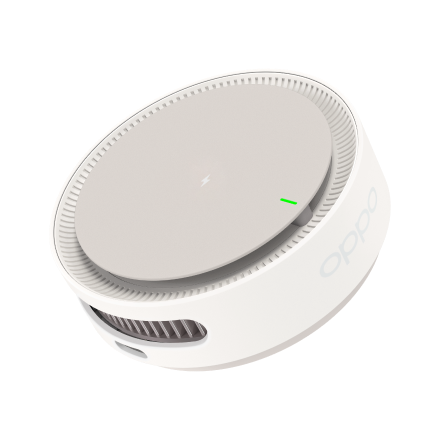
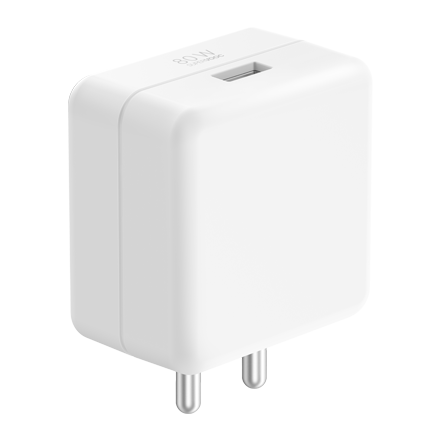
Travel is one of the situations where battery information genuinely belongs in camera discussion. The OPPO Find X9 Ultra has a 7,050mAh typical battery and supports up to 100W SUPERVOOC wired charging and 50W AIRVOOC wireless charging.
Its 17.32cm display can reach up to 3600 nits peak (outdoor/HBM-boost) under OPPO's stated outdoor peak condition. That matters when the phone is being used as a viewfinder in bright daylight rather than simply as an indoor media screen. There is also a dedicated Master Shutter button, part of a design inspired by the Hasselblad X2D 100C Earth Explorer Edition.
None of these replaces camera quality, but they affect how practical the camera is once a journey lasts longer than a quick photo stop.
Conclusion
Travel rarely gives photographers ideal distances or controlled lighting. That is exactly why focal-length flexibility matters. With 14mm, 23mm, 70mm and 230mm perspectives forming the core of its camera experience, the OPPO Find X9 Ultra lets travellers decide whether a scene needs more context, more intimacy or substantially more reach.
For Indian users comparing a best zoom camera phone for travel, the strongest argument is not simply "10x". It has several genuinely different ways to frame the same journey.
Frequently Asked Questions
Q1: Which is a top-rated smartphone with a powerful optical zoom camera in India?
No universal rating applies to every traveller, but the OPPO Find X9 Ultra is a relevant option for people who put optical reach high on their list. It has a dedicated 50MP 10x optical-zoom telephoto with a 230mm equivalent focal length.
Q2: Is 3x or 10x more useful while travelling?
The 3x 70mm camera is likely to suit portraits, street details and medium-distance subjects, while 10x at 230mm is designed for subjects that are substantially farther away.
Q3: Can I use optical zoom for video?
Yes. OPPO India lists video zoom support up to 10x optical zoom and up to 30x digital zoom on the rear cameras.
Q4: What camera should I use for architecture?
It depends on distance and composition. The 14mm ultra-wide helps fit large structures into the frame from close range, while the telephoto cameras can isolate architectural details farther away.
Q5: Does the OPPO Find X9 Ultra have enough storage for travel photos and video?
The India model is listed with 12GB RAM and 512GB UFS 4.1 storage. Available user storage is lower because the operating system and software use part of the capacity.