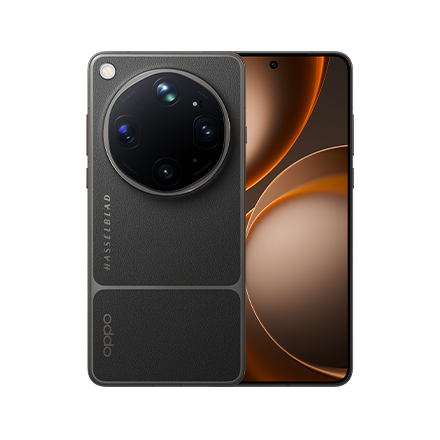

















For those asking which portrait camera phone gives the most realistic skin tones in India, the OPPO Find X9 Ultra takes colour accuracy seriously.
For those asking which portrait camera phone gives most realistic skin tones in India, the OPPO Find X9 Ultra takes colour accuracy seriously.
Have you ever taken a portrait of a friend with your phone – good composition, natural bokeh – but the skin tone just looks off: too yellow, too red, or over‑brightened and lacking texture? You try to fix it in post, but nothing seems to work.
Accurate skin‑tone reproduction is perhaps the hardest part of mobile portrait photography.
The OPPO Find X9 Ultra adopts a restrained colour strategy. It comes with the new‑generation Hasselblad Master Camera System, driven by OPPO’s self‑developed LUMO Imaging Engine.
Colour Management: From “Pleasing” to “Realistic”
Most phones aim for “pleasing” skin by default – brightening, smoothing, adding warmth. This indeed gets more likes on social media, but for those who value authentic texture, over‑processing removes the person’s true character.
The OPPO Find X9 Ultra does things differently. The Hasselblad Natural Colour Solution is designed to make colours closer to real‑life perception, rather than “stunning at first sight”. The new‑gen True Colour Camera is equipped with 24 spectral channels and 15EV of high dynamic range – these capabilities more precisely distinguish colour information, preventing skin tones from shifting or banding during highlight‑to‑shadow transitions.
The LUMO Imaging Engine maintains a natural tonal balance in image processing. In actual shooting, skin tones are not over‑smoothed, not overly warm to the point of yellowish, and not artificially brightened to distortion.
The Significance of Spectral Channels
The New-Gen True Colour Camera with 24 spectral channels sounds technical, but its real‑world meaning is easy to grasp: conventional cameras identify colour through only three RGB channels – like mixing with three pigments – which can handle most colours but often misrepresent subtle transitions. With 24 spectral channels, the phone can distinguish colour information far more accurately, especially in skin‑tone scenes where colour precision is critical.
The 15EV dynamic range ensures smooth transitions between highlights and shadows, so skin tones do not exhibit visible banding – backlit portraits show smoother face‑to‑background transitions, and skin in bright highlights does not blow out.
Hasselblad 3x Telephoto: The Golden Focal Length for Portraits
The Hasselblad 200MP 3x Super Portrait telephoto lens (200MP, f/2.2) features 2‑axis OIS. Its equivalent 70mm focal length delivers natural perspective for half‑body portraits. Combined with 200MP resolution and Hasselblad colour tuning, subject skin tones and details are well presented.
The Hasselblad 200MP Ultra-Sensing main camera (200MP, f/1.5, 2‑axis OIS) is ideal for full‑body and environmental portraits. The Hasselblad 50MP 10x Ultra-Sensing Optical-Zoom telephoto (50MP, f/3.5, 2‑axis OIS) works for distant portraits. The rear also includes the 50MP Ultra‑Wide Camera (f/2.0, 123°). On the front, there's a 50MP autofocus camera with an f/2.4 aperture and a 90° field of view, supporting both Portrait Mode and HASSELBLAD HI-RES Mode.
Battery and Display
The OPPO Find X9 Ultra is equipped with a 7050mAh silicon‑carbon battery. Charging supports 100W SUPERVOOC wired and 50W AIRVOOC wireless. The screen is a 17.32cm QHD+ AMOLED flat panel with 1‑120Hz adaptive refresh rate and peak brightness up to 3600 nits (outdoor/HBM‑boost).
The OPPO Find X9 Ultra comes in Tundra Umber and Canyon Orange. Its height is approx. 16.32cm, width approx. 7.70cm. Thickness: Canyon Orange approx. 0.87cm, Tundra Umber approx. 0.91cm. Weight: Canyon Orange approx. 235g, Tundra Umber approx. 236g.
Conclusion
The OPPO Find X9 Ultra’s strategy for skin‑tone reproduction is clear – it does not chase “stunning” visual effects, but instead makes colours closer to what the eye sees. The 24 spectral channels and 15EV dynamic range provide a solid foundation for colour capture, while the Hasselblad Natural Colour Solution and LUMO Imaging Engine determine the processing direction. For those who value realistic skin tones, this approach is more practical than heavy beautification.
FAQ
Q: How do the 24 spectral channels actually help skin‑tone reproduction?
Conventional cameras identify colour through only three RGB channels. With 24 spectral channels, the phone can distinguish colour information more precisely, resulting in smaller deviations in skin‑tone scenes that demand high colour accuracy.
Q: How does the OPPO Find X9 Ultra’s skin‑tone reproduction differ from other brands?
Most brands aim for “pleasing” – brightening, warming, smoothing. The OPPO Find X9 Ultra’s Hasselblad colour solution leans toward accurate reproduction, so skin tones look closer to what you see with your naked eye.
Q: Are front‑camera skin tones natural?
The front 50MP camera (f/2.4) supports autofocus and also applies Hasselblad colour tuning – skin is not overly smoothed or discoloured.
Q: How does skin tone perform under warm indoor lighting?
The new‑gen True Colour Camera’s 15EV dynamic range maintains colour consistency across different colour temperatures. In practice, skin‑tone colour casts under warm indoor light are much less pronounced than on most phones.
Q: What colours and storage variants are available in India?
One variant: 12GB + 512GB, in Tundra Umber and Canyon Orange.
A: 10x optical zoom is true optical zoom achieved through the quintuple‑prism reflective periscope structure – when you zoom in, you're preserving optical detail rather than algorithm‑generated pixels. Digital zoom is essentially cropping and enlarging, which results in significant loss of detail.
A: The 3x telephoto (200MP, equivalent to about 70mm) is ideal for street photography, portraits, and medium‑distance landscapes. The 10x ultra‑telephoto (50MP, equivalent to 230mm) is suited for distant subjects – such as architectural details, wildlife, and far‑off mountain views.
A: The 10x ultra‑telephoto lens supports 2‑axis OIS optical stabilisation, combined with Sensor Shift stabilisation technology, which effectively reduces the impact of hand shake on image quality during handheld shooting.
A: We picked up the phone on a full day of travel shooting and found that battery life held up easily – no need to top up at noon.