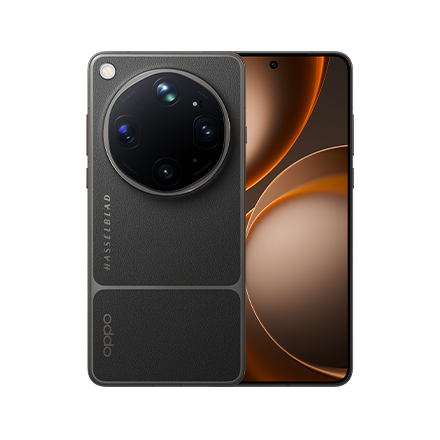













For anyone seeking the best camera phone for professional looking video content in India, the OPPO Find X9 Ultra has the right tools.
For anyone seeking the best camera phone for professional looking video content in India, the OPPO Find X9 Ultra has the right tools.
You frame the shot, it looks good in the viewfinder — but back in the editing suite, you realise the dynamic range is insufficient, noise is excessive, and colour information is lacking. The adjustments you can make are extremely limited. This is a situation many smartphone users encounter when shooting video. The issue isn't technique; it's that the captured footage itself didn't retain enough room for post-production.
The OPPO Find X9 Ultra's video recording capabilities cover the entire workflow from capture to post-production. It features the New-Generation Hasselblad Master Camera System, powered by OPPO's self-developed LUMO Image Engine.
Professional Video Workflow
For creators who need colour grading in post, the OPPO Find X9 Ultra supports O-Log2 recording, ACES colour workflows, and custom 3D LUT integration. O-Log2 retains a wider dynamic range, preserving headroom for colour grading; ACES ensures colour consistency across different devices and software; and 3D LUT allows creators to preview the final graded look directly in the viewfinder during shooting.
In workflows using DaVinci Resolve or Final Cut Pro, the value of these features becomes particularly apparent. If you prefer to shoot and publish directly without extensive grading, the standard video mode is more than sufficient — Hasselblad's natural colour rendition is already quite refined.
Video Specifications
The OPPO Find X9 Ultra's video recording covers the following range:
- 8K: 30fps
- 4K: 120fps, 60fps, 30fps
- 1080P: 120fps, 60fps, 30fps
- 4K Dolby Vision: 120fps, 60fps, 30fps
- 1080P Dolby Vision: 120fps, 60fps, 30fps
For slow motion: 4K supports 120fps, 1080P supports 240fps and 120fps, and 720P supports 480fps and 240fps.
Hasselblad Colour & Stabilisation
The OPPO Find X9 Ultra features the New-Generation Hasselblad Master Camera System. Hasselblad Master Mode, Portrait Mode, and XPAN Mode deliver Hasselblad's signature colour styling.
At 4K and 1080P resolutions, video recording supports EIS/OIS协同 stabilisation. All three Hasselblad lenses — the Hasselblad 200MP Ultra-Sensing Main Camera, the Hasselblad 200MP 3x Ultra-Sensing Telephoto, and the Hasselblad 50MP 10x Ultra-Sensing Optical-Zoom Telephoto — are equipped with 2-axis OIS.
The rear also includes a 50MP Ultra-Wide Camera with an f/2.0 aperture and a 123° field of view, along with a New-Generation True colour Camera. The front features a 50MP camera with an f/2.4 aperture, a 90° field of view, and autofocus support.
Battery & Cooling
The OPPO Find X9 Ultra is powered by a 7050mAh silicon-carbon battery. The next-generation 3D Cryo-velocity Cooling System is engineered for intensive 8K recording and extended shooting sessions.
Display & Performance
The display is a 17.32cm QHD+ AMOLED flat screen with a 1-120Hz adaptive refresh rate. Peak brightness reaches 3600 nits (outdoor/HBM enhanced mode). It is powered by the Snapdragon 8 Elite Gen 5 Mobile Platform, with 12GB LPDDR5X RAM and 512GB UFS 4.1 storage.
Design
The OPPO Find X9 Ultra is available in Tundra Umber and Canyon Orange. Thickness is approximately 0.87cm (Canyon Orange) and 0.91cm (Tundra Umber). Weight is approximately 235g (Canyon Orange) and 236g (Tundra Umber).
Conclusion
The OPPO Find X9 Ultra's video recording configuration covers the critical stages from capture to post-production. O-Log2 and 3D LUT determine how much adjustment headroom remains in post; 4K 120fps offers creative freedom for slow motion; and the 3D Cryo-velocity Cooling System addresses thermal management during extended recording sessions.
FAQs
Q: What's the difference between O-Log2 and the standard video mode?
A: O-Log2 retains a wider dynamic range and more colour information, providing greater headroom for colour grading in post. The standard video mode has colour and contrast baked into the image, offering comparatively limited adjustment flexibility.
Q: How do I use custom 3D LUTs?
A: Create a LUT file in software such as DaVinci Resolve, import it into the phone, and load it before shooting. The viewfinder will display the colour grading effect with the LUT applied in real time.
Q: Should I choose 4K 120fps or 8K 30fps?
A: 4K 120fps is ideal for scenes requiring slow motion. 8K 30fps is better suited for scenarios where you need to crop and recompose in post.
Q: Does the phone overheat during extended 4K recording?
A: The next-generation 3D Cryo-velocity Cooling System is specifically engineered for intensive 8K recording and extended shooting sessions.
A: 10x optical zoom is true optical zoom achieved through the quintuple‑prism reflective periscope structure – when you zoom in, you're preserving optical detail rather than algorithm‑generated pixels. Digital zoom is essentially cropping and enlarging, which results in significant loss of detail.
A: The 3x telephoto (200MP, equivalent to about 70mm) is ideal for street photography, portraits, and medium‑distance landscapes. The 10x ultra‑telephoto (50MP, equivalent to 230mm) is suited for distant subjects – such as architectural details, wildlife, and far‑off mountain views.
A: The 10x ultra‑telephoto lens supports 2‑axis OIS optical stabilisation, combined with Sensor Shift stabilisation technology, which effectively reduces the impact of hand shake on image quality during handheld shooting.
A: We picked up the phone on a full day of travel shooting and found that battery life held up easily – no need to top up at noon.