







Hair, Jewellery and Fine Detail: How OPPO Find X9 Ultra Approaches Portrait Edge Detection
Hair, Jewellery and Fine Detail: How OPPO Find X9 Ultra Approaches Portrait Edge Detection
Background blur attracts attention because it is immediately visible. For portrait photography, however, the quality of the boundary between the person and that blur can be more revealing.
Loose hair, glasses, jewellery, embroidered clothing and objects held close to the body all create difficult edges. If portrait processing misreads them, parts of the subject may be blurred away, while an overly sharp outline can make a person appear cut out from the background.
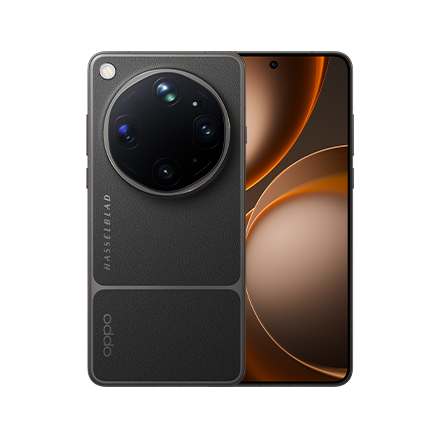
For Indian users considering the best portrait camera phone, that issue becomes particularly relevant in photographs involving detailed clothing, jewellery, family celebrations, fashion content or product-focused portraits. The OPPO Find X9 Ultra approaches subject separation through a combination of Hasselblad Portrait Mode, LUMO processing and multiple camera focal lengths.
Why does edge detection matter for smartphone portrait bokeh?
Portrait processing has to understand more than the silhouette of a person. The camera is effectively interpreting which parts of a three-dimensional scene should remain sharp and how quickly other areas should fall out of focus.
Fine hair is an obvious challenge, but not the only one. Earrings, transparent glasses, patterned textiles or a hand holding a product can create small gaps and overlapping layers. Those details make a simple foreground-versus-background mask less convincing.
OPPO's Hasselblad Portrait Mode uses Hasselblad Tonality and the LUMO True Face Algorithm. Also, OPPO describes Natural Portrait Bokeh, smooth tonal transitions and portrait processing from 1x through 10x.
How can focal length improve subject separation before software is applied?
Portrait Mode is computational, but the photograph still begins with optics and composition. Changing focal length changes where the photographer stands, how much background enters the frame and how the scene appears spatially.
The OPPO Find X9 Ultra's 200MP main camera uses an f/1.5 aperture and supports 2-axis OIS. Its 200MP 3x telephoto moves to an f/2.2 aperture, while the 50MP 10x ultra-telephoto uses an f/3.5 aperture. All three support autofocus and 2-axis OIS.
The 3x perspective is useful when a portrait needs tighter framing without moving extremely close to the person. The 10x camera provides a much longer option where greater subject isolation or distance suits the scene.
For fashion, jewellery or product-focused portraits, this flexibility in focal length can help keep the subject visually distinct from the background while preserving a more natural sense of depth.
Where can edge handling become particularly important in Indian portrait photography?
Portraits taken in India frequently involve visually detailed settings, but it is better to treat these as practical examples rather than assume every user photographs the same way.
At a wedding or celebration, a frame may contain hair, jewellery, decorative fabrics and lights simultaneously. A fashion creator may photograph intricate textile edges. Someone making social commerce or product content may hold cosmetics, electronics, food or another object close to the face.
These situations give portrait processing several boundaries to interpret at once.
That is why the useful question is not simply whether a phone “has bokeh”. It is whether its camera system gives the photographer enough control over perspective, focus and composition to produce a convincing result in a complicated scene.
The OPPO Find X9 Ultra combines its Hasselblad portrait processing with high-resolution main and telephoto cameras, giving users several ways to frame these situations rather than relying entirely on one default portrait perspective.
How does colour influence a portrait with a complex background?
Fine edge separation gets much of the technical attention, but a portrait can still look unnatural if the subject's colour feels disconnected from the environment.
The New-Gen True Colour Camera forms part of the OPPO Find X9 Ultra imaging system, while Hasselblad Tonality contributes specifically to the portrait workflow.
For a subject wearing colourful clothing or photographed among decorative lights, that relationship matters. Good portrait processing should guide attention towards the person without making the rest of the photograph look as though it came from a different image.
This is also useful for product-led creator content. A portrait where a person is holding jewellery, cosmetics or another product may need both face and object to remain visually clear. The most suitable focal length and shooting distance can therefore be just as important as the intensity of the background blur.
What can the front camera do for self-facing portraits?
Self-facing portrait content presents its own edge-detection and focus challenges because the photographer cannot always monitor every detail while taking the image.
The OPPO Find X9 Ultra uses a 50MP f/2.4 front camera with autofocus. Its India specifications include Portrait, HASSELBLAD HI-RES, Night and Pro Video among the supported front-camera modes.
Autofocus helps when the distance between the face and camera changes, which can be useful for handheld selfies, group photographs and creator-facing content.
Conclusion
Strong portrait photography involves more than blurring the background. Fine subject boundaries, focal length, skin tone and the transition between sharp and soft areas all affect whether the final photograph feels convincing.
The OPPO Find X9 Ultra combines Hasselblad Portrait Mode, the LUMO True Face Algorithm, multiple portrait-capable focal lengths and high-resolution camera hardware to approach those challenges from both the optical and computational sides.
For Indian users photographing people, detailed clothing, jewellery, products or visually busy celebrations, that makes the OPPO Find X9 Ultra relevant to the search for a best portrait camera phone where subject separation and bokeh matter together.
Frequently Asked Questions
How does the OPPO Find X9 Ultra handle portrait bokeh?
Hasselblad Portrait Mode combines Hasselblad Tonality, the LUMO True Face Algorithm and Natural Portrait Bokeh processing.
Q2: Why is edge detection important in Portrait Mode?
It helps the camera distinguish fine subject details from the background so that blur does not incorrectly cover hair, clothing edges or nearby objects.
Q3: Which camera is useful for tighter portraits?
The 200MP 3x telephoto offers a medium-telephoto perspective, while the 50MP 10x camera provides a much longer shooting option.
Q4: Can the OPPO Find X9 Ultra be used for portraits with jewellery or detailed clothing?
Its high-resolution cameras and portrait processing provide tools for these scenes, although results still depend on lighting, composition, subject movement and shooting distance.
Q5: Does the front camera support portrait photography?
Yes. The 50MP autofocus front camera includes Portrait and HASSELBLAD HI-RES modes.