
















When Background Blur Should Not Steal the Picture: OPPO Find X9 Ultra and the Best Portrait Camera Phone Search in India
When Background Blur Should Not Steal the Picture: OPPO Find X9 Ultra and the Best Portrait Camera Phone Search in India
Background blur works best when you stop noticing it. If the transition around hair, glasses, clothing or shoulders looks artificial, the viewer starts paying attention to the effect rather than the person in the photograph. Stronger blur is therefore not automatically better portrait photography. That makes natural background blur a useful way to evaluate the best portrait camera phone in India.
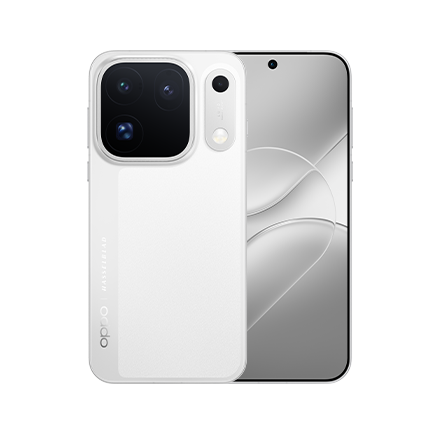
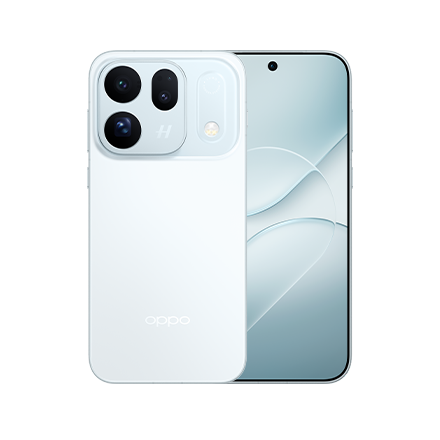
The OPPO Find X9 Ultra combines Hasselblad Portrait Mode with a 200MP 3x telephoto camera and OPPO's LUMO Imaging Engine, giving portrait photography both an optical and computational foundation.
The Distance Between Camera and Subject Matters
Imagine photographing someone seated at an outdoor café with tables, plants and people in the background.
Using a wide camera from very close range can include more of the environment, but it can also change facial perspective. Stepping back and switching to a telephoto focal length changes the composition before any software blur is applied.
The OPPO Find X9 Ultra's 200MP 3x telephoto camera features:
- f/2.2 aperture
- 34° field of view
- Approximately 70mm equivalent focal length
- Autofocus
- 2-axis OIS
This focal length is well suited to half-body portraits and closer compositions where the photographer wants the subject to occupy more of the frame without standing extremely close.
Natural Blur Is Also About Transition
Smartphone portrait photography relies on computational processing to understand where the subject ends and the background begins.
Hasselblad Portrait Mode works with OPPO's LUMO Imaging Engine to support portrait rendering and background separation. The goal is not simply to blur everything behind the subject as strongly as possible. A convincing result depends on maintaining a smoother relationship between the in-focus subject and the out-of-focus background. Complex details such as loose hair, glasses or irregular clothing edges make this particularly relevant.
A Busy Background Can Be a Better Test Than a Blank Wall
Portrait modes are easy to judge against a simple background. Real photographs are more complicated. A portrait may include trees, chairs, signs, people in the distance or lights at different depths. Those elements make subject separation and perspective more visible.
Using the 3x telephoto can also simplify the composition by narrowing the field of view, reducing some of the visual clutter before portrait processing is applied.
Not Every Portrait Needs Telephoto
Natural portrait photography is also about choosing the right amount of context.
The 200MP main camera has an f/1.5 aperture, 84° field of view and 2-axis OIS. This can be useful for environmental portraits where the location is part of the story. For more specialised compositions, the 50MP 10x ultra-telephoto provides a significantly tighter perspective with stronger compression.
The value of the overall camera system is therefore not one "portrait lens" but the ability to choose how much of the environment should remain visible.
Colour Can Make or Break a Natural Portrait
Even convincing background separation can feel unnatural if skin tone shifts too far from the scene.
The OPPO Find X9 Ultra includes the New-Gen True Colour Camera, designed to read colour and lighting information across 24 spectral channels. Together with the Hasselblad imaging system and LUMO Imaging Engine, it supports colour processing across different portrait environments. The 50MP front camera also features autofocus and supports Portrait mode and Hasselblad Hi-Res, extending portrait-focused shooting to selfies and front-facing photographs.
Portrait Review Is About Small Differences
Choosing between several portrait frames often comes down to fine details: eye focus, expression, edge separation and colour.
The OPPO Find X9 Ultra's 17.32cm QHD+ AMOLED flat display has 3168 × 1440 resolution and 510 PPI, while up to 3600 nits peak (outdoor/HBM-boost) supports visibility in bright environments.
Conclusion
The most natural-looking portrait is not necessarily the one with the strongest background blur. Perspective, subject distance, colour, edge transitions and the amount of context left in the frame all contribute to the final result.
With its 200MP 3x telephoto, Hasselblad Portrait Mode, LUMO Imaging Engine and New-Gen True Colour Camera, the OPPO Find X9 Ultra approaches portrait blur as part of a wider portrait system.
For users looking for the best portrait camera phone with natural background blur in India, that balance is worth considering alongside blur strength alone.
Frequently Asked Questions
Q1: Which OPPO Find X9 Ultra camera is most useful for natural portrait blur?
The 200MP 3x telephoto is particularly useful for half-body and closer portraits because of its approximately 70mm equivalent focal length.
Q2: Does OPPO Find X9 Ultra have Hasselblad Portrait Mode?
Yes. Hasselblad Portrait Mode is supported as part of the New-generation Hasselblad Master Camera System.
Q3: Is stronger background blur always better for portrait photos?
No. Natural-looking results also depend on subject separation, perspective, colour and the transition between focused and unfocused areas.
Q4: Can the main camera be used for portraits?
Yes. The 200MP main camera is useful when more of the environment needs to remain visible around the subject.
Q5: Does the front camera support portrait photography?
Yes. The 50MP autofocus front camera supports Portrait mode and Hasselblad Hi-Res.