











Natural Skin Tones Matter More Than Beauty Filters: OPPO Find X9 Ultra as the Best Portrait Camera Phone
Natural Skin Tones Matter More Than Beauty Filters: OPPO Find X9 Ultra as the Best Portrait Camera Phone
Portrait photography is often discussed as a background-blur problem. Keep the person sharp, soften everything behind them, and the job appears to be done. While in practice, colour can be harder. A portrait may have convincing bokeh yet still feel artificial if the person's complexion shifts too warm, too cool or too saturated. This becomes especially challenging in mixed lighting, where the face, clothing and background may all be illuminated by different colour temperatures.
When comparing the best portrait camera phone options in India, skin tone accuracy deserves as much attention as the quality of the background blur.
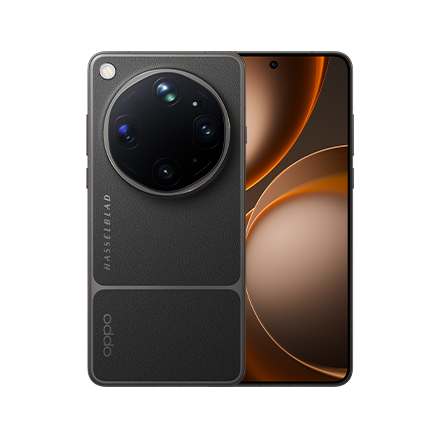
The OPPO Find X9 Ultra addresses that question through several parts of its imaging chain, including the New-Gen True Colour Camera, Hasselblad Natural Colour Solution, Hasselblad Portrait Mode and the LUMO True Face Algorithm.
Why Skin Tone Is a Difficult Camera Problem
A phone does not know inherently that one area of an image is supposed to look "natural". It has to estimate the light source, interpret colour information and decide how to render the final image.
Consider an evening celebration. Warm decorative lighting may illuminate one side of a person's face, while a cooler source reaches the other. Correcting everything towards neutral could remove the atmosphere; leaving every colour cast untouched could make the complexion look inaccurate. The challenge is therefore not simply to remove colour but to understand the relationship between the person and the environment.
What Does the New-Gen True Colour Camera Add?
OPPO's New-Gen True Colour Camera uses 24 spectral channels and supports 15EV high dynamic range. OPPO says it continuously responds to changing colour temperatures and works across photo, motion photo, and video capture.
In Feature → Function → Benefit terms, the relationship is straightforward.
- Feature: additional spectral colour information.
- Function: the imaging system has more information about the light and colour present in the scene.
- Benefit: the phone has a stronger basis for rendering skin, clothing and ambient light without relying solely on broad colour assumptions.
That is particularly relevant in India, where portrait situations can move quickly between harsh daylight, warm indoor light, colourful wedding illumination, and night scenes.
Hasselblad Portrait Mode Does More Than Bokeh
Hasselblad Portrait Mode on the OPPO Find X9 Ultra is rooted in Hasselblad Tonality and uses the LUMO True Face Algorithm. OPPO states that the mode is designed to maintain lifelike skin tones and natural bokeh from 1x through 10x. This wide focal-length range is important because portrait does not describe a single composition. A wider perspective can include the person's environment. A medium telephoto can concentrate more strongly on the face. A longer telephoto changes the relationship between subject and background again. The processing therefore needs to behave consistently even as the optics change.
Why the 70mm Camera Deserves Particular Attention
For conventional portraits, the Hasselblad 200MP 3x Super Portrait Telephoto is the most obvious place to start. It uses a 70mm equivalent focal length, a 1/1.28-inch sensor and an f/2.2 aperture. OPPO India also lists 2-axis OIS for this camera. A medium-telephoto perspective allows the photographer to stand farther from the subject than with the main camera while still filling the frame. That helps avoid the exaggerated perspective that can occur when a wide camera is placed very close to a face. It also provides more control over what appears behind the person.
For environmental portraits, the Hasselblad 200MP main camera offers another option. Its 23mm focal length and f/1.5 aperture allow more of the surroundings into the story.
The point is not to nominate one universal portrait lens, but to let the composition determine which camera makes sense.
What About Self-Portraits?
The front camera on the OPPO Find X9 Ultra is a 50MP autofocus unit with an f/2.4 aperture and 90-degree field of view. Portrait mode is included among its officially listed shooting modes. Autofocus is particularly relevant for a front camera because the shooting distance changes when the phone is held by hand, mounted for a group photograph or used for front-facing content. It also helps make the portrait discussion more complete.
Natural Does Not Mean Identical in Every Situation
No camera can guarantee exactly the same skin tone under every lighting condition. Exposure, local light, display settings and individual preferences all influence how a photograph is perceived. That is why "most realistic" should not be treated as an unsupported universal ranking.
The OPPO Find X9 Ultra has additional spectral colour sensing, Hasselblad colour processing, a portrait algorithm specifically designed around faces, and multiple focal lengths for different compositions. For someone who dislikes portraits that look excessively beautified or detached from the surrounding light, those are more useful things to examine than a generic camera score.
Conclusion
A convincing portrait needs more than sharp eyes and a blurred background. Skin tone, tonal transitions and the way the person sits within the surrounding light determine whether the image still feels believable. The OPPO Find X9 Ultra combines the New-Gen True Colour Camera, Hasselblad Natural Colour Solution, LUMO True Face Algorithm and a dedicated 70mm 3x portrait camera to address those different parts of the problem.
That makes its portrait proposition less about adding stronger effects and more about controlling colour, perspective and depth together.
Frequently Asked Questions
Q1: Which portrait camera phone gives the most realistic skin tones in India?
There is no independently established single winner for every complexion and lighting condition. The OPPO Find X9 Ultra is specifically designed around natural colour and portrait rendering, using a New-Gen True Colour Camera with 24 spectral channels together with Hasselblad Portrait Mode and the LUMO True Face Algorithm.
Q2: Which camera is most suited to conventional portraits on the OPPO Find X9 Ultra?
The Hasselblad 200MP 3x Super Portrait Telephoto is designed around a 70mm equivalent focal length and is a natural starting point for tighter portraits.
Q3: Does Hasselblad Portrait Mode work at more than one zoom level?
Yes. OPPO states that Hasselblad Portrait Mode supports lifelike skin-tone and bokeh rendering across focal lengths from 1x to 10x.
Q4: What does the New-Gen True Colour Camera do?
It uses 24 spectral channels to provide additional colour information and is designed to adapt to changing colour temperatures across the imaging system.
Q5: Does the front camera support autofocus?
Yes. The 50MP front camera supports autofocus as well as Portrait mode.