





Portraits That Still Look Like the Person: How OPPO Find X9 Ultra Fits the Best Portrait Camera Phone Search in India
Portraits That Still Look Like the Person: How OPPO Find X9 Ultra Fits the Best Portrait Camera Phone Search in India
Blur is easy to notice in a portrait. Whether the person actually looks natural is harder to judge. A smartphone can produce a heavily softened background and still miss the things that matter more such as skin tone, facial proportions, fine hair around the subject, colour under mixed lighting, and the transition between the person and the background.
That makes the search for the best portrait camera phone in India less about how strong the bokeh looks and more about whether the whole image remains convincing.
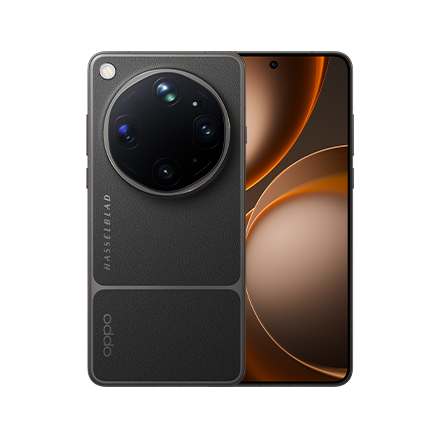
The OPPO Find X9 Ultra approaches portrait photography through the New-generation Hasselblad Master Camera System, LUMO Imaging Engine, New-Gen True Colour Camera and multiple focal lengths that give photographers different ways to frame a person.
Start With the Face, Not the Background Blur
Portrait photography often happens in imperfect lighting. A person may be standing beside a café window, under shade outdoors or near a mixture of indoor and natural light. In each case, the camera needs to interpret the colour of the face without allowing the dominant light source to shift skin tone too far.
The OPPO Find X9 Ultra includes a New-Gen True Colour Camera that reads colour and lighting information across 24 spectral channels. Combined with the LUMO Imaging Engine, the system is designed to support more accurate colour processing across changing lighting conditions. That is particularly relevant for portraits because viewers are highly sensitive to unfamiliar-looking skin tones. Small colour shifts that might go unnoticed in a landscape can be obvious on a face.
Why 3x Is More Than Just Zoom for Portraits
The 200MP 3x telephoto is one of the most relevant cameras in the OPPO Find X9 Ultra portrait system. It uses an f/2.2 aperture, 34° field of view, autofocus and 2-axis OIS, with a focal length of approximately 70mm equivalent. That perspective is useful for half-body portraits and tighter compositions because the photographer can step farther away than when using a wide camera. The result is a different relationship between subject and background. Facial proportions remain more natural than when the camera is held very close with a wide lens, while the tighter angle of view helps remove distracting elements from the frame. Hasselblad Portrait Mode then works alongside OPPO's computational imaging system to support background separation and portrait rendering.
One Portrait Session Does Not Need One Lens
A portrait does not always mean a close-up face. For an environmental portrait where surroundings matter, the 200MP main camera provides a wider 84° field of view with an f/1.5 aperture and 2-axis OIS. For a tighter portrait, the 3x telephoto gives the photographer additional working distance. The 50MP 10x ultra-telephoto provides another creative option for distant compositions and stronger perspective compression, although it serves a more specialised role than the 3x camera for everyday portraits. This focal-length flexibility means a single portrait session can move between a person and their surroundings rather than forcing every photograph into the same composition.
The Front Camera Is Part of Portrait Photography Too
For many users, portrait photography is as likely to happen with the front camera as the rear system. The OPPO Find X9 Ultra features a 50MP front camera with an f/2.4 aperture, 90° field of view and autofocus. Portrait mode is available on the front camera, as is Hasselblad Hi-Res. Autofocus matters because selfie distance is not always fixed. A phone might be held close to an individual portrait, farther away from two people or mounted for creator content. The ability to maintain focus across those changing distances makes the front camera a more complete part of the portrait system rather than simply an addition for video calls.
Checking the Details Before You Post
Portrait photography often ends with reviewing several nearly identical frames. Small differences therefore matter, including sharp eyes, a convincing expression, an uncluttered background and natural colour.
The OPPO Find X9 Ultra's 17.32cm QHD+ AMOLED flat display has a 3168 × 1440 resolution, 510 PPI and 10-bit colour depth. It supports up to 3600 nits peak (outdoor/HBM-boost), helping users review portraits in brighter outdoor conditions. A 7,050mAh silicon-carbon battery, along with 100W SUPERVOOC wired charging and 50W AIRVOOC wireless charging, also supports longer photography sessions.
Conclusion
A convincing smartphone portrait is built from several small decisions: where the photographer stands, which focal length is used, how skin tone is rendered and how naturally the subject separates from the background.
The OPPO Find X9 Ultra combines Hasselblad Portrait Mode, a 200MP 3x telephoto camera, the New-Gen True Colour Camera, LUMO Imaging Engine and a 50MP autofocus front camera to address those different parts of portrait photography.
For users comparing the best portrait camera phone in India, that broader portrait system is worth considering alongside the more obvious question of how much background blur a phone can create.
Frequently Asked Questions
Q1: Which OPPO Find X9 Ultra camera is most suitable for portraits?
The 200MP 3x telephoto is particularly useful for half-body portraits and closer compositions because of its approximately 70mm equivalent focal length.
Q2: Does OPPO Find X9 Ultra support Hasselblad Portrait Mode?
Yes. Hasselblad Portrait Mode is part of the camera system, alongside Hasselblad Master and XPAN modes.
Q3: How does OPPO Find X9 Ultra handle skin tone?
The New-Gen True Colour Camera reads colour and lighting information across 24 spectral channels, while the LUMO Imaging Engine supports colour and image processing.
Q4: Can I take portraits with the front camera?
Yes. The 50MP autofocus front camera supports Portrait mode and Hasselblad Hi-Res.
Q5: Is the 10x camera useful for portraits?
It can be used for more distant compositions or stronger perspective compression, while the 3x telephoto is generally the more practical telephoto option for everyday portrait distances.