








Office Lights, Café Windows and Campus Corridors: OPPO Find X9 Ultra Puts Skin Tone to the Mixed-Light Test
Office Lights, Café Windows and Campus Corridors: OPPO Find X9 Ultra Puts Skin Tone to the Mixed-Light Test
A portrait beside an office window may combine cool daylight with warm ceiling lights. A café table can mix window lights, pendant lamps and illuminated signs. A campus corridor may shift from bright outdoor light to fluorescent lighting within a few steps. These are everyday portrait situations, but they are difficult for a phone camera because the light illuminating the face does not always have one consistent colour temperature.
For users looking for the best portrait camera phone in India, this makes colour accuracy just as important as resolution or background blur.
Why Is Mixed Lighting Difficult for Portrait Photography?
Different Light Sources Can Pull Skin Tone in Different Directions
Camera systems need to interpret the colour of the light before deciding how the final image should look. When several light sources overlap, that decision becomes more complicated. Correcting strongly for one light source can make another part of the frame appear too warm or too cool.
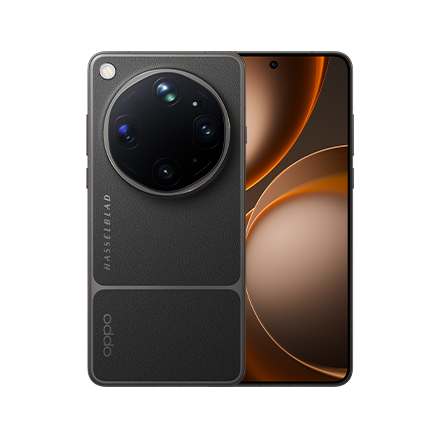
The OPPO Find X9 Ultra addresses this with its New-Generation True Colour Camera, which uses 24 spectral channels and supports 15EV high dynamic range. OPPO says the system continuously responds to changing colour temperatures across lenses and focal lengths.
For portraits, the goal is to retain more lifelike skin tones while preserving the colour of the surrounding environment rather than forcing the whole frame towards one uniform tone.
How Does OPPO Find X9 Ultra Approach Skin Tone?
Hasselblad Portrait Mode Works With the True Colour System
Colour information alone is not enough. The phone also needs to decide how the face itself should be rendered. Hasselblad Portrait Mode combines Hasselblad Tonality with OPPO's LUMO True Face Algorithm. OPPO describes the system as supporting lifelike skin tones and natural bokeh across focal lengths from 1x to 10x. The New-Gen True Colour Camera then provides additional colour information across changing lighting conditions, including mixed-light scenes. Together, these technologies focus on a practical portrait problem: keeping the subject's complexion believable when the surrounding light changes.
The 3x Portrait Camera Also Matters Indoors
A Large Telephoto Sensor Helps When Light Drops
The OPPO Find X9 Ultra includes a 200MP 3x Super Portrait Telephoto with a 70mm focal length, large 1/1.28-inch sensor and f/2.2 aperture. OPPO positions this telephoto camera for both portraits and lower-light scenes, giving users a tighter portrait perspective without immediately returning to the main camera when the environment becomes dimmer. For wider environmental portraits, the 200MP main camera uses a 23mm focal length, 1/1.12-inch sensor and f/1.5 aperture. This gives photographers different ways to frame a person depending on how much of the office, café or surrounding space should remain visible.
What If Ambient Light Is Not Enough?
Full-Focal Portrait Flash Adds Another Lighting Option
The OPPO Find X9 Ultra also includes Full-Focal Portrait Flash, supported by the LUMO Portrait Flash Algorithm. OPPO describes it as a smarter flash solution designed to work across different shooting distances. That can be useful when indoor ambient lighting is simply too weak to produce the portrait the photographer wants. The important distinction is that flash is an additional tool, rather than the entire low-light strategy. The camera system still combines larger sensors, portrait processing and colour sensing when available light is sufficient.
Which Feature Helps With Which Portrait Challenge?
- Mixed colour temperatures: New-Gen True Color Camera
- Natural skin tones: Hasselblad Portrait Mode + LUMO True Face Algorithm
- Tighter portrait framing: 200MP 70mm 3x Super Portrait Telephoto
- Environmental portraits: 200MP 23mm main camera
- Very low ambient light: Full-Focal Portrait Flash
This is why judging a portrait phone only by megapixels can miss the bigger picture. Portrait quality also depends on how the camera understands light, colour and depth.
Conclusion
Indoor portraits rarely happen under perfectly controlled lighting. By combining a 24-channel New-Gen True Color Camera, Hasselblad Portrait Mode, the LUMO True Face Algorithm, and a dedicated 70mm portrait telephoto, the OPPO Find X9 Ultra addresses both colour and composition rather than treating portrait photography as background blur alone.
For users in India comparing the best portrait camera phone options for everyday people photography, its focus on skin tone and mixed-light colour makes it particularly relevant to real indoor shooting situations.
Frequently Asked Questions
Q1: How does the OPPO Find X9 Ultra handle mixed lighting?
Its New-Gen True Colour Camera uses 24 spectral channels and continuously adapts to changing colour temperatures across different shooting situations.
Q2: What is the best OPPO Find X9 Ultra lens for a tighter portrait?
The dedicated 200MP 3x Super Portrait Telephoto uses a 70mm focal length, 1/1.28-inch sensor and f/2.2 aperture.
Q3: Does the OPPO Find X9 Ultra have portrait flash?
Yes. It features Full-Focal Portrait Flash supported by OPPO's LUMO Portrait Flash Algorithm.
Q4: Does Portrait Mode work at different focal lengths?
Yes. OPPO states that Hasselblad Portrait Mode supports focal lengths from 1x to 10x.