












OPPO Find X9 Ultra: Best Long-Range Zoom & Low-Light Camera in India
Which smartphone has the best long-range zoom camera and great low light in India? OPPO Find X9 Ultra might be the one
Light in India is never monolithic. The midday sun is harsh enough to make you squint, sunset brings a soft, warm glow, and the streets at night are filled with all kinds of artificial light sources—street lamps, neon signs, headlights—each one testing the limits of a phone's camera. Add to that the fact that you never know whether your next worthwhile shot is fifty meters away or a hundred, and suddenly "telephoto" and "low-light" become two problems that need to be solved simultaneously.
Most phones can do one of these well, but not many can handle both. The OPPO Find X9 Ultra has made some interesting attempts in this regard.
Let's Start with Telephoto: 10x Optical Zoom, 230mm Equivalent Focal Length
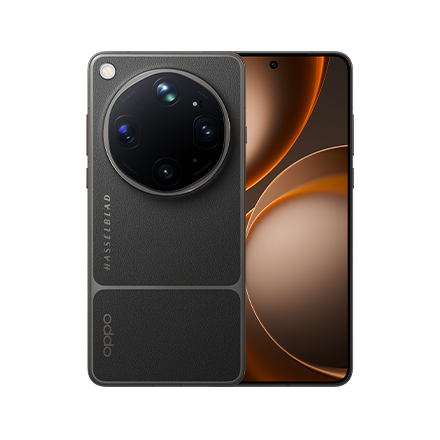
The OPPO Find X9 Ultra's biggest selling point is its 50MP 10x optical zoom ultra-telephoto lens. It doesn't use the standard single-reflection periscope structure—OPPO has employed an industry-first Quintuple Prism Periscope Structure, where light is reflected five times within the module. The result is an optical path folded into a compact space of just 29mm, yet achieving an equivalent focal length of 230mm.
What does 10x optical zoom actually mean? Simply put, when you're shooting players on the field from the back row of a stadium, deer in the distance at a wildlife reserve, or performers on stage at a music festival—you can zoom in and still retain the details. The system also supports 20x "optical-quality" zoom and up to 120x digital zoom. There's also a 200MP 3x telephoto lens (f/2.2, approximately 70mm equivalent), which is great for portraits and mid-range scenes in daily use.
Now, Low-Light: Still Delivers in Dark Environments
Telephoto works well during the day, but what about at night? This is where many phones fall apart. The OPPO Find X9 Ultra tackles this with a two-pronged approach.
On the hardware side, the main camera uses a 200MP sensor with a wide f/1.5 aperture, giving it an inherent advantage in light-gathering capability. The system's new-gen True Color camera, in low-light scenarios, does a better job of preserving natural tones and details—without brightening shadows too aggressively or blowing out highlights. In short, low-light photos look more like "night scenes" rather than "daylight pushed into darkness."
On the software side, the LUMO Imaging Engine focuses on maintaining natural tonal balance, authentic color reproduction, and clear detail retention during image processing. In practice, this translates to cleaner, less noisy images when shooting at night.
The Complete Rear Imaging System
The OPPO Find X9 Ultra's rear setup consists of five lenses. The ultra-wide is a 50MP lens with an f/2.0 aperture and a 123° field of view—great for sweeping landscapes or large group shots. The wide-angle main camera uses a 200MP sensor with a wide f/1.5 aperture, paired with 2-axis OIS to keep shots steady even in low light.
On the telephoto side, there are two lenses. One is a 200MP 3x telephoto with an f/2.2 aperture, also supporting 2-axis OIS—this is the most natural focal length for portraits, equivalent to roughly 70mm, with pleasing perspective. The other is a 50MP 10x ultra-telephoto with an f/3.5 aperture, also featuring 2-axis OIS, equivalent to 230mm, specifically designed for distant subjects. There's also a 3.2MP monochrome lens with an f/2.4 aperture, which assists with image detail refinement.
The front camera is a 50MP sensor (f/2.4, 90° field of view) with autofocus. When taking selfies, focus automatically locks onto your face, so you don't need to tap the screen to adjust.
Stabilization: The Telephoto's Best Partner
Telephoto and low-light share a common enemy—camera shake. At 10x zoom, even the slightest movement is magnified significantly. The OPPO Find X9 Ultra's 10x ultra-telephoto lens supports 2-axis OIS optical stabilization, complemented by OPPO's sensor-shift stabilization technology. Along with the wide-angle main camera and the 3x telephoto, all three lenses feature 2-axis OIS.
Conclusion
The OPPO Find X9 Ultra's performance in both telephoto and low-light scenarios doesn't rely on any single feature in isolation—it comes from the synergy between hardware and algorithms. The 10x optical zoom system solves the "shoot far" problem; the multi-spectral color sensor and high dynamic range tackle the "see clearly in the dark" challenge; and OIS and sensor-shift technology hold everything steady.
For anyone in India looking for a phone that can both capture distant subjects and deliver usable images in low-light conditions, the OPPO Find X9 Ultra offers an option well worth serious consideration. It's not the kind of device that "looks great on paper but always has a weak spot in practice"—in the two scenarios that most test a phone's imaging capabilities, telephoto and low-light, it delivers genuinely reliable performance.
A: Yes. The OPPO Find X9 Ultra's 10x ultra-telephoto lens uses a penta-prism reflective periscope structure, where light undergoes five internal reflections before reaching the sensor, delivering true optical zoom—not digital cropping.
A: The 10x ultra-telephoto lens has an aperture of f/3.5, which doesn't gather as much light as the main camera's f/1.5 in dark environments. However, combined with 2-axis OIS optical stabilization and sensor-shift technology, handheld stability is well maintained. The system also includes a Night Mode that further optimizes brightness and detail in low-light scenes.
A: 50MP, f/3.5 aperture, 11° field of view, 230mm equivalent focal length, with 2-axis OIS optical stabilization.
A: The 3x telephoto (200MP, f/2.2, 70mm equivalent) is ideal for portraits, mid-range shots, and everyday zoom needs. The 10x ultra-telephoto (50MP, f/3.5, 230mm equivalent) is suited for sports events, concerts, wildlife, and other scenarios that require shooting from a distance.