






What Makes a Portrait Look Natural? Exploring OPPO Find X9 Ultra for Portrait Photography
What Makes a Portrait Look Natural? Exploring OPPO Find X9 Ultra for Portrait Photography
A blurred background is easy for a portrait mode to create. Making that blur look as though it belongs in the photograph is considerably harder.
The difference often appears around the edges of a person, in the transition from sharp to soft areas and in the way skin tones sit alongside colourful clothing or complex backgrounds. A portrait can have plenty of blur and still feel artificial if those elements do not work together.
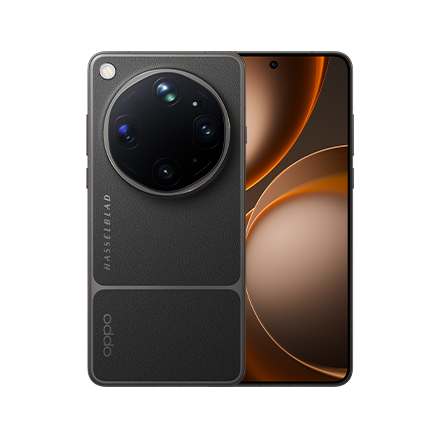
For Indian buyers searching for the best portrait camera phone, this matters across family photographs, weddings, festival celebrations, travel portraits and everyday social content. The OPPO Find X9 Ultra approaches the problem through Hasselblad Portrait Mode, high-resolution telephoto hardware and the LUMO Imaging Engine rather than relying on blur intensity as the only measure of portrait quality.
What makes background blur look natural in a smartphone portrait?
Real depth does not normally change from sharp to fully blurred at one perfectly defined line. Hair, clothing and objects at different distances create gradual transitions, which is why smartphone portrait processing becomes particularly noticeable when the scene is complex.
Hasselblad Portrait Mode on the OPPO Find X9 Ultra is rooted in Hasselblad Tonality and uses OPPO's LUMO True Face Algorithm. OPPO describes the mode as supporting skin-tone rendering across focal lengths from 1x to 10x, together with Natural Portrait Bokeh and smooth tonal transitions.
The system also gives photographers several physical focal lengths to work with rather than asking one camera to simulate every portrait perspective.
Why can the 3x telephoto camera be useful for people photography?
Focal length affects a portrait before computational blur is added. A wider lens can include more environment, while a medium telephoto perspective allows the photographer to stand farther back and frame the subject more tightly.
The OPPO Find X9 Ultra's 3x telephoto camera uses a 200MP sensor, an f/2.2 aperture, autofocus and 2-axis OIS. OPPO's imaging materials associate the 3x camera with a roughly 70mm-equivalent perspective, making it particularly relevant for half-body and tighter portraits.
For weddings, family gatherings or festival photography in India, that can provide a useful middle ground. The photographer does not need to be uncomfortably close to the person, while the background can occupy less of the frame than it would with a wide-angle composition.
The 10x telephoto provides an even longer perspective for distant portraits or compositions where stronger visual compression suits the scene.
Why does portrait colour matter as much as bokeh?
Background separation draws attention to the subject, but colour determines how much of the scene still feels believable. Skin, jewellery, clothing and decorative lighting may all appear in the same frame.
The OPPO Find X9 Ultra combines the New-Gen True Colour Camera with its broader imaging pipeline, while Hasselblad Tonality is specifically integrated into Portrait Mode. The goal is not simply to blur everything behind the person, but to keep the portrait visually coherent as colour, depth and facial rendering are processed together.
That becomes particularly relevant in visually rich Indian settings. Wedding attire, festive decorations and mixed indoor lighting can place several colours and textures close together. In these scenes, an attractive portrait depends on preserving the character of the environment while still making the person clear.
How does the front camera fit into the portrait experience?
Many portraits today are self-facing rather than photographed by another person. A creator may be making a social post, a family member may want a group selfie, or someone may simply want a more controlled self-portrait.
The OPPO Find X9 Ultra's front camera is 50MP with autofocus, an f/2.4 aperture and a 90-degree field of view. OPPO India also lists Portrait and HASSELBLAD HI-RES among its front-camera shooting modes. Autofocus is useful because focus can adapt when the subject-to-camera distance changes instead of depending entirely on a fixed focal plane.
Performance and display for reviewing portrait detail
Portrait photography often involves taking several frames and comparing small differences in expression, focus and composition. The Snapdragon 8 Elite Gen 5 Mobile Platform provides the processing foundation, supported by 12GB LPDDR5X RAM and 512GB UFS 4.1 storage.
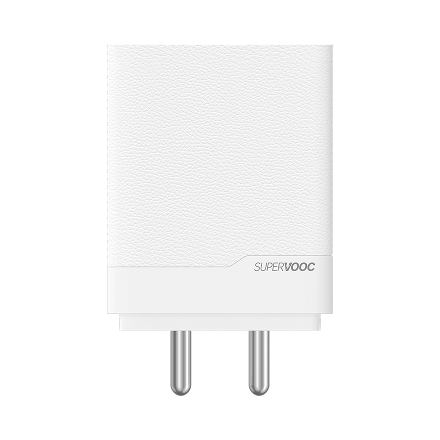
A 7,050mAh typical battery supports longer shooting sessions, with 100W SUPERVOOC wired and 50W AIRVOOC wireless charging available when power runs low.
The 17.32 cm QHD+ AMOLED display reaches up to 3600 nits peak (outdoor/HBM-boost) according to OPPO's outdoor peak specification. This is particularly relevant when reviewing portraits outside, where screen visibility affects how easily a photographer can judge framing and detail.
Conclusion
The best portrait camera phone is not necessarily the handset that produces the strongest background blur. A convincing portrait depends on the relationship between focal length, skin tone, subject edges, colour and depth.
The OPPO Find X9 Ultra approaches those elements through Hasselblad Portrait Mode, the LUMO True Face Algorithm and a camera system that moves from the 200MP main camera to 3x and 10x telephoto perspectives. The 50MP autofocus front camera extends portrait options to self-facing photography as well.
For Indian users photographing family, celebrations, travel and social content, that combination provides several ways to create portraits without making artificial-looking blur the only objective.
Frequently Asked Questions
Q1: Does OPPO Find X9 Ultra support Hasselblad Portrait Mode?
Yes. OPPO India lists Hasselblad Portrait Mode with Hasselblad Tonality and LUMO True Face Algorithm processing.
Q2: Which camera is useful for portrait photography?
The 200MP 3x telephoto is particularly relevant for medium-telephoto portraits, while the main camera is useful when more of the environment should remain in frame.
Q3: Can the 10x camera be used for portraits?
Its longer telephoto perspective can be useful for distant subjects and compositions that benefit from stronger compression.
Q4: Does the front camera support Portrait Mode?
Yes. The 50MP autofocus front camera includes Portrait and HASSELBLAD HI-RES modes.
Q5: Does natural bokeh depend only on software?
No. The final portrait is influenced by camera choice, shooting distance, focal length, lighting and computational processing together.