
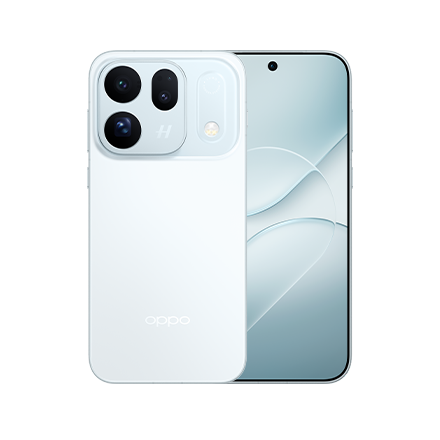


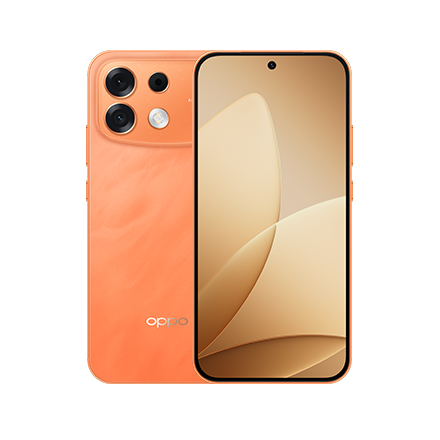











Five Shots to Think About Before Choosing the Best Camera Phone for Cinematic Video: OPPO Find X9 Ultra in India
Five Shots to Think About Before Choosing the Best Camera Phone for Cinematic Video: OPPO Find X9 Ultra in India
Instead of asking whether a phone has a "cinematic" mode, try building a five-shot sequence. Start with a wide view of the location. Move closer for the subject. Capture a detail. Follow a short movement. End with a shot after the light has changed. That small exercise reveals far more about a video camera than one cinematic label.
For anyone wondering how to pick a camera phone for cinematic video in India, the OPPO Find X9 Ultra provides several tools for constructing those shots through its New-generation Hasselblad Master Camera System, different focal lengths and professional recording formats.
Shot One: Give the Viewer a Sense of Place
A cinematic sequence often begins by showing where the story is happening.
The OPPO Find X9 Ultra's 50MP ultra-wide camera provides a 123° field of view, making it suitable for establishing a larger environment.
A creator filming a short café feature, studio profile, campus project or travel sequence can use the wider camera to introduce the location before moving closer to the subject. The 200MP main camera then provides an 84° field of view, f/1.5 aperture and 2-axis OIS for more general coverage.
Shot Two: Change the Perspective Without Changing the Subject
Moving from a wide frame to a tighter shot does more than make the subject larger. It changes the relationship between the person and the background.
The OPPO Find X9 Ultra's 200MP 3x telephoto uses an f/2.2 aperture, 34° field of view and 2-axis OIS. That tighter perspective can work for a dialogue shot, a presenter speaking to camera or a detail that needs more visual emphasis. The 50MP 10x ultra-telephoto goes further, using a Quintuple Prism Periscope Structure for long-range framing when physically moving closer is not practical.
Shot Three: Use Frame Rate as a Creative Choice
Not every movement needs slow motion. But when a specific action deserves emphasis, frame-rate flexibility becomes useful.
The OPPO Find X9 Ultra supports:
- 8K 30fps
- 4K 30fps
- 4K 60fps
- 4K 120fps
- 4K Dolby Vision HDR at up to 120fps
A normal-speed conversation and a slowed movement sequence therefore do not need to use the same recording settings. For cinematic video, this is more useful than treating the highest frame rate as the default for every scene.
Shot Four: Keep Handheld Movement Deliberate
A handheld shot does not need to be completely static. It does need to feel intentional.
During 4K and 1080P video recording, coordinated EIS/OIS stabilisation is supported. The main camera, 3x telephoto and 10x ultra-telephoto also each include 2-axis OIS. This means creators can work across several focal lengths while retaining hardware stabilisation support, whether they are following a subject or adjusting their position during a take.
Shot Five: Decide How the Final Colour Should Feel
Cinematic footage is often shaped as much in post-production as during capture.
The OPPO Find X9 Ultra supports O-Log2, the ACES colour workflow, and real-time 3D LUT preview and burn-in. For creators who want to grade their footage, these tools provide greater control over the final look and help organise colour decisions across multiple clips. OPPO's LUMO Imaging Engine also supports image processing across the Hasselblad camera system, while the New-Gen True Colour Camera contributes colour information across different lighting conditions.
What About Longer Shoots?
A short film, creator project or narrative sequence can involve multiple takes. The Snapdragon 8 Elite Gen 5 platform is paired with a next-generation 3D Cryo-velocity cooling system designed for intensive 8K recording and prolonged shooting scenarios. The OPPO Find X9 Ultra also includes a 7,050mAh silicon-carbon battery, 100W SUPERVOOC wired charging and 50W AIRVOOC wireless charging. Its 17.32cm QHD+ AMOLED flat display supports up to 3600 nits peak (outdoor/HBM-boost) for reviewing footage across different environments.
Conclusion
"Cinematic" video is better understood as a collection of creative decisions rather than one camera mode.
The OPPO Find X9 Ultra provides creators with wide, main and telephoto perspectives, multiple frame rates, Dolby Vision HDR, stabilisation and professional colour-management tools.
For anyone comparing the best camera phone for video in India, thinking in terms of the shots a project actually needs can be more useful than choosing a device based on one cinematic label.
Frequently Asked Questions
Q1: What makes a smartphone useful for cinematic video?
Useful features include different focal lengths, flexible frame rates, stabilisation, HDR recording and colour-grading tools.
Q2: Does OPPO Find X9 Ultra support Log video?
Yes. It supports O-Log2 recording for creators who plan to colour-grade footage.
Q3: Can OPPO Find X9 Ultra record cinematic slow motion in 4K?
It supports 4K recording at up to 120fps, which provides flexibility for slow-motion sequences.
Q4: Does the phone offer several camera perspectives for video?
Yes. The rear system includes ultra-wide, main, 3x telephoto and 10x ultra-telephoto cameras.
Q5: Is 8K necessary for cinematic video?
No. 8K provides additional resolution, but cinematic results also depend on framing, movement, colour and the recording format chosen for each shot.