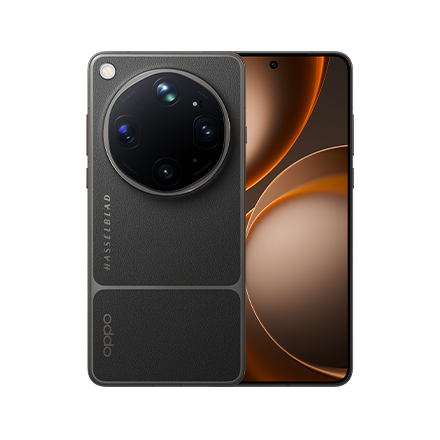












For anyone searching for a portrait camera phone with strong edge detection and bokeh in India, the OPPO Find X9 Ultra makes the cut where others fail.
For anyone searching for a portrait camera phone with strong edge detection and bokeh in India, the OPPO Find X9 Ultra makes the cut where others fail.
Have you ever experienced this when taking portraits – everything looks great in the viewfinder, but when you zoom in later, you see the hair edges look as if they were cut with scissors, with a strange transition line between the shoulder and background. The more you zoom, the more odd it appears.
This is a problem common to virtually all phone portrait modes, though to varying degrees. Curly hair, glasses, sari edges, tree‑branch backgrounds – these elements are shot every day, but few phones handle them well.
The OPPO Find X9 Ultra tackles this with a different logic, driven by OPPO’s self‑developed LUMO Imaging Engine and equipped with the new‑generation Hasselblad Master Camera System to solve these challenges.
What Makes Edge Detection Difficult
A phone’s portrait mode is essentially a “separation‑blur” process: first determine which pixels belong to the subject and which to the background, then blur the background. The problem is that the separation step itself is very hard to get right.
A single strand of hair is only about 0.05mm wide, occupying just a few pixels in the photo. The algorithm must decide among those few pixels which belong to the hair and which to the background. If it guesses wrong, you get half‑sharp, half‑blurred hair. The gap between glasses frames and cheeks, or the folds of a sari – these are even trickier.
Most phones try to improve the algorithm itself, making it “guess” better. The OPPO Find X9 Ultra adds a step before the algorithm.
Distance Information: So the Algorithm Doesn’t Have to Guess
Among the five rear cameras on the OPPO Find X9 Ultra, four support autofocus: the ultra‑wide (50MP, f/2.0, 123°), the Hasselblad 200MP Ultra-Sensing main camera (200MP, f/1.5), the Hasselblad 3x Super Portrait telephoto (200MP, f/2.2), and the Hasselblad 50MP 10x Ultra-Sensing Optical-Zoom telephoto (50MP, f/3.5). The front 50MP camera (f/2.4) also supports autofocus.
The core value of multi‑focal autofocus is this: no matter which lens you use, the camera can obtain accurate distance information – knowing exactly how far the subject is from the camera and how far the background is. With this data, the edge‑detection algorithm no longer needs to “guess” where the subject boundary lies; it can directly judge based on distance data.
The Bokeh Approach
Hasselblad Portrait mode works in tandem with the LUMO Imaging Engine. With distance information in hand, bokeh no longer relies on “cut‑out” techniques; instead, the background is blurred layer by layer according to distance data – areas closer to the subject receive lighter blur, while farther areas get stronger blur. This mimics the depth‑of‑field transition of optical lenses.
In practice, curly hair edges are handled much more cleanly than on most phones, without half‑sharp artefacts. The transition between subject and background is smooth.
Hasselblad 3x Telephoto: The Go‑To Focal Length for Portraits
The Hasselblad 200MP 3x Super Portrait telephoto lens (200MP, f/2.2, 34° FOV) features 2‑axis OIS. Its equivalent 70mm focal length provides natural perspective for half‑body portraits. With 200MP resolution, subject detail is rich.
The Hasselblad 200MP Ultra-Sensing main camera (200MP, f/1.5, 2‑axis OIS) is suited for full‑body and environmental portraits. The Hasselblad 50MP 10x Ultra-Sensing Optical-Zoom telephoto (50MP, f/3.5, 2‑axis OIS) handles distant portraits.
Shooting modes include Portrait, Master, HASSELBLAD HI‑RES, and HASSELBLAD TELECONVERTER. The front camera also supports Portrait mode.
Performance and Design
The OPPO Find X9 Ultra packs a 7050mAh silicon‑carbon battery, with 100W SUPERVOOC wired and 50W AIRVOOC wireless charging. The display is a 17.32cm QHD+ AMOLED flat screen with 1‑120Hz adaptive refresh rate.
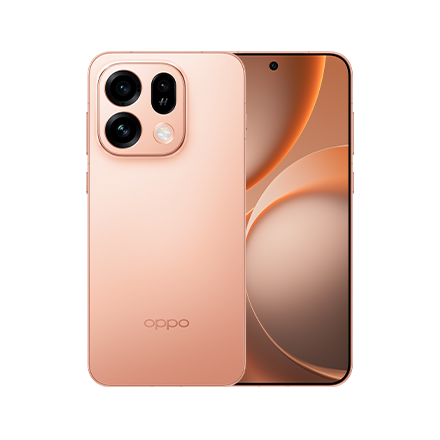
It is available in Tundra Umber and Canyon Orange. Height approx. 16.32cm, width approx. 7.70cm. Thickness: Canyon Orange approx. 0.87cm, Tundra Umber approx. 0.91cm. Weight: Canyon Orange approx. 235g, Tundra Umber approx. 236g.
Conclusion
The edge‑detection challenge in phone portrait modes is not primarily due to insufficient algorithms, but rather the lack of reliable distance information for accurate decisions. The OPPO Find X9 Ultra’s approach is to use multi‑focal autofocus to obtain distance data, giving edge recognition a solid information base rather than relying on algorithms to “guess”. For users who frequently shoot portraits and care about edge quality, this difference is immediately perceptible.
FAQ
Q: How accurate is edge detection?
The OPPO Find X9 Ultra uses multi‑focal autofocus to obtain distance information for edge recognition, rather than relying on a single algorithm to “guess” boundaries. In real‑world shooting, curly hair and glasses edges are handled much more cleanly than on most phones.
Q: Why do phone portraits often fail at hair edges?
Hair strands are only about 0.05mm wide, occupying just a few pixels – it is extremely hard for an algorithm to decide which pixels belong to hair and which to background. The OPPO Find X9 Ultra uses distance information to assist that decision, reducing the chance of failure.
Q: How is the bokeh effect in Hasselblad Portrait mode?
Hasselblad Portrait mode works with the LUMO Imaging Engine to create bokeh that is not simply “smearing the background”, but layered blur based on distance data, closely mimicking optical depth‑of‑field transitions.
Q: Which Hasselblad lens is best for portraits?
The Hasselblad 3x Super Portrait telephoto (200MP, f/2.2, equivalent ~70mm) delivers natural perspective for half‑body portraits and is the most commonly used focal length for portrait photography.
Q: What colours and storage variants are available in India?
One variant: 12GB + 512GB, in Tundra Umber and Canyon Orange.
A: 10x optical zoom is true optical zoom achieved through the quintuple‑prism reflective periscope structure – when you zoom in, you're preserving optical detail rather than algorithm‑generated pixels. Digital zoom is essentially cropping and enlarging, which results in significant loss of detail.
A: The 3x telephoto (200MP, equivalent to about 70mm) is ideal for street photography, portraits, and medium‑distance landscapes. The 10x ultra‑telephoto (50MP, equivalent to 230mm) is suited for distant subjects – such as architectural details, wildlife, and far‑off mountain views.
A: The 10x ultra‑telephoto lens supports 2‑axis OIS optical stabilisation, combined with Sensor Shift stabilisation technology, which effectively reduces the impact of hand shake on image quality during handheld shooting.
A: We picked up the phone on a full day of travel shooting and found that battery life held up easily – no need to top up at noon.