













When Distance Meets Dusk: OPPO Find X9 Ultra and the Best Zoom Camera Phone Question in India
When Distance Meets Dusk: OPPO Find X9 Ultra and the Best Zoom Camera Phone Question in India
A distant subject in bright midday light is one thing. Photographing it again around sunset is a different problem. As available light falls, longer focal lengths become less forgiving. Hand movement becomes more obvious, shutter speeds may need to change, and colour can shift quickly as daylight gives way to artificial lighting.
That makes the question "Which smartphone has a long-range zoom camera and great low light in India?" more complicated than simply finding the largest zoom number.
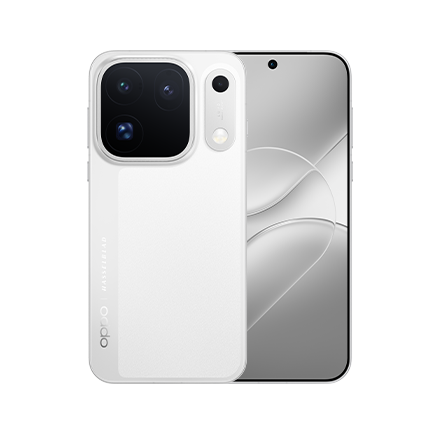
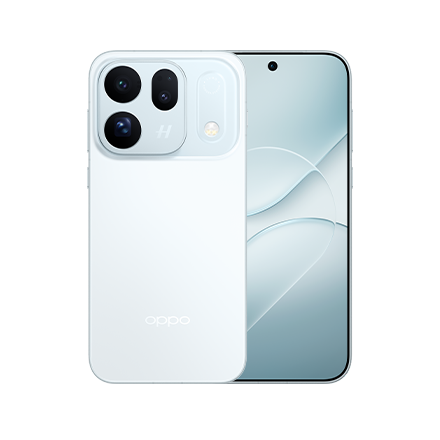
The OPPO Find X9 Ultra approaches the problem with different cameras for different distances and lighting conditions, backed by its New-generation Hasselblad Master Camera System, New-Gen True Colour Camera and LUMO Imaging Engine.
Start With the Light Before Choosing the Zoom
Imagine photographing an outdoor sports practice in the late afternoon. From the sideline, 3x may be enough to isolate a player without losing the surrounding context.
The OPPO Find X9 Ultra's 200MP 3x telephoto combines an f/2.2 aperture with autofocus and 2-axis OIS. It provides a useful middle ground between the main camera and the much tighter 10x view. As the subject moves farther away, the 50MP 10x ultra-telephoto offers another option. Its f/3.5 lens, 11° field of view and approximately 230mm equivalent focal length are designed for situations where physical distance cannot easily be reduced.
Instead of asking one camera to cover every long-range situation, the dual-telephoto arrangement lets the photographer select the focal length that better fits the scene.
Why Stabilisation Becomes More Important After Sunset
A small movement at the main camera's focal length may barely affect the composition. At 10x, the same movement can shift the frame noticeably. The OPPO Find X9 Ultra equips both telephoto cameras with 2-axis OIS. The 10x ultra-telephoto also works with Telephoto Sensor Shift technology. This becomes relevant in situations such as photographing an illuminated building from across an open space, capturing activity from the far side of a venue, or framing a distant subject during blue hour.
The phone cannot create light that is not there, and the 10x camera's f/3.5 aperture naturally has different light-gathering characteristics from the f/1.5 main camera. The advantage of the complete system is that photographers can move between focal lengths instead of forcing the longest zoom into every low-light scene.
When the Main Camera Makes More Sense
Good zoom photography is partly about knowing when not to use the longest lens. The 200MP main camera on the OPPO Find X9 Ultra has an f/1.5 aperture, 84° field of view, autofocus and 2-axis OIS. When the environment becomes much darker, it can be the more suitable choice for a wider scene. A photographer could therefore use the main camera for an evening streetscape, switch to 3x for a person or feature at medium distance, and reserve 10x for a brightly lit subject that remains physically far away.
That flexibility is supported by the LUMO Imaging Engine, which handles computational photography across the imaging system. The New-Gen True Colour Camera also contributes colour information across 24 spectral channels, supporting more accurate colour processing as different light sources enter a scene.
Long-Range Photography Is Also About Patience
Telephoto photography often involves waiting. A subject may need to move into the frame, lighting may change, or a photographer may take several compositions before finding the right balance.
The OPPO Find X9 Ultra's 7,050mAh silicon-carbon battery supports longer photography sessions, while 100W SUPERVOOC wired charging and 50W AIRVOOC wireless charging provide faster ways to top up between shoots. The 17.32cm QHD+ AMOLED flat display also helps when checking fine details. With 3168 × 1440 resolution, 510 PPI and up to 3600 nits peak (outdoor/HBM-boost), photographers can review framing and focus across different environments.
Conclusion
Long-range photography becomes most demanding when distance and difficult light appear at the same time.
The OPPO Find X9 Ultra does not approach that problem with a single zoom number. Its 200MP 3x telephoto, 50MP 10x ultra-telephoto, OIS, Sensor Shift technology, LUMO Imaging Engine and New-Gen True Colour Camera give photographers several ways to adapt as both distance and light change.
That versatility is what makes it relevant to buyers considering the best zoom camera phone in India, particularly those who expect telephoto photography to continue after the brightest part of the day.
Frequently Asked Questions
Q1: Is 10x always the best option for low-light zoom photography?
Not necessarily. The available light, subject distance and required composition all matter. The 3x telephoto or f/1.5 main camera may be more appropriate in darker conditions depending on the scene.
Q2: What stabilisation does the 10x telephoto use?
The 50MP 10x ultra-telephoto supports 2-axis OIS and works with Telephoto Sensor Shift technology.
Q3: Can OPPO Find X9 Ultra photograph distant subjects after sunset?
Its dual telephoto system provides long-range options, while optical stabilisation and computational imaging support handheld shooting. Results will still depend on available light and the specific scene.
Q4: How does the New-Gen True Colour Camera help at night?
It reads colour and lighting information across 24 spectral channels, supporting more accurate colour processing when scenes contain different light sources.
Q5: What makes OPPO Find X9 Ultra relevant to a best zoom camera phone search?
Its combination of 3x and 10x telephoto cameras, optical stabilisation, periscope design and wider imaging system provides different tools for different shooting distances.