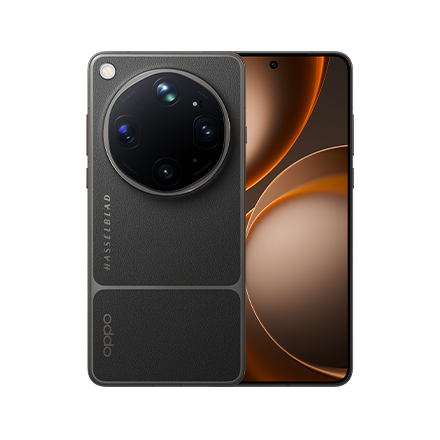

















If you are wondering how to pick a camera phone for cinematic video in India, the OPPO Find X9 Ultra has the right tools.
If you are wondering how to pick a camera phone for cinematic video in India, the OPPO Find X9 Ultra has the right tools.
There is a big difference between shooting video and taking photos: if a photo is bad, you can often fix it in post‑production; but if video is poorly captured, post‑processing has very limited room for rescue. This is especially true when you want a “cinematic” look – colour, dynamic range, frame rate, and grading flexibility all test the phone’s imaging capability.
The OPPO Find X9 Ultra offers one of the most complete video‑recording solutions on the current smartphone market. It supports 8K 30fps, 4K 120fps Dolby Vision HDR, as well as O‑Log2, the ACES colour workflow, and custom 3D LUT integration.
O‑Log2 and 3D LUT Are Key to the Cinematic Feel
Many people assume “cinematic” is mostly about colour grading. In reality, grading requires footage that retains sufficient dynamic range and colour information. Normal video modes “bake” colour and contrast into the image, leaving little latitude for adjustment.
O‑Log2 solves that – it preserves a wider dynamic range so that highlight and shadow details are not clipped. 3D LUTs solve the “pre‑visualisation” problem, allowing you to see the colour grade close to the final output directly in the viewfinder.
This means directors or cinematographers can judge on‑set whether the image meets expectations, rather than discovering later that the footage is unusable. For team‑based creative projects, this workflow is invaluable.
Frame Rate Choices: The Practicality of 4K 120fps
The OPPO Find X9 Ultra’s video specs cover the full range from 8K 30fps to 1080P 120fps. Among them, 4K 120fps is the most noteworthy – it delivers excellent quality and enables smooth slow‑motion in post.
For slow‑motion: 4K supports 120fps; 1080P supports 240fps and 120fps; 720P supports 480fps and 240fps. 4K Dolby Vision is supported at 120fps, 60fps, and 30fps.
Hasselblad Colour and Stabilisation
The Hasselblad Master mode offers a restrained colour style – it does not artificially boost saturation, and skin tones lean toward realistic reproduction. For projects that require grading, this style leaves more room for adjustment than colour modes that are saturated to the max.
At 4K and 1080P, video recording supports EIS/OIS collaborative stabilisation. All three Hasselblad lenses – the 200MP Ultra-Sensing main camera (f/1.5), the Hasselblad 200MP 3x Super Portrait telephoto (f/2.2), and the Hasselblad 50MP 10x Ultra-Sensing Optical-Zoom telephoto (f/3.5) – come with 2‑axis OIS.
Battery Life and Cooling
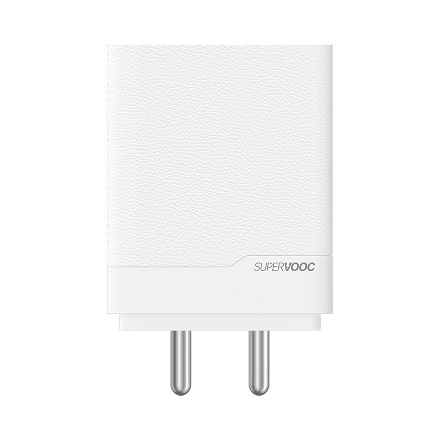
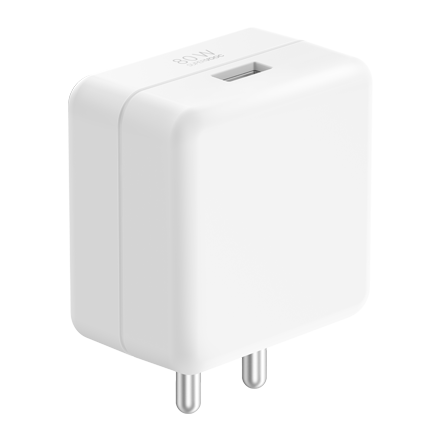
Video recording places high demands on power and heat dissipation. The OPPO Find X9 Ultra is powered by a 7050mAh silicon‑carbon battery, with 100W SUPERVOOC wired and 50W AIRVOOC wireless charging. The new 3D Cryo‑velocity cooling system is designed specifically for intensive 8K recording and long shooting sessions.
The display is a 17.32cm QHD+ AMOLED flat screen with 1‑120Hz adaptive refresh rate. It runs on the 5th‑generation Snapdragon 8 Elite Gen 5 platform, with 12GB LPDDR5X RAM and 512GB UFS 4.1 storage.
Conclusion
When choosing a phone for cinematic video shooting, O‑Log2 and 3D LUT are more important than megapixel counts – they determine how much latitude your footage retains for post‑production. The OPPO Find X9 Ultra’s support for both features transforms it from a “phone that captures clearly” into a tool that can participate in professional workflows.
FAQ
Q: What’s the difference between O‑Log2 and normal video mode?
O‑Log2 retains a wider dynamic range and colour information, leaving more room for colour grading. Normal video mode bakes colour and contrast into the image, offering limited post‑adjustment flexibility.
Q: How does the custom 3D LUT work?
The viewfinder shows the LUT‑applied colour effect in real time, allowing you to make creative decisions on the spot.
Q: Which should I choose – 4K 120fps or 8K 30fps?
4K 120fps is ideal for slow‑motion scenes. 8K 30fps is better if you need to crop in post – the 8K resolution gives you enough room to reframe without losing quality.
Q: Do long 4K recordings cause overheating?
The 3D Cryo‑velocity cooling system is built for high‑intensity video recording. In real‑world use, continuous 4K recording stability is better than most flagship phones.
A: 10x optical zoom is true optical zoom achieved through the quintuple‑prism reflective periscope structure – when you zoom in, you're preserving optical detail rather than algorithm‑generated pixels. Digital zoom is essentially cropping and enlarging, which results in significant loss of detail.
A: The 3x telephoto (200MP, equivalent to about 70mm) is ideal for street photography, portraits, and medium‑distance landscapes. The 10x ultra‑telephoto (50MP, equivalent to 230mm) is suited for distant subjects – such as architectural details, wildlife, and far‑off mountain views.
A: The 10x ultra‑telephoto lens supports 2‑axis OIS optical stabilisation, combined with Sensor Shift stabilisation technology, which effectively reduces the impact of hand shake on image quality during handheld shooting.
A: We picked up the phone on a full day of travel shooting and found that battery life held up easily – no need to top up at noon.