
















Beyond the Crop: How OPPO Find X9 Ultra Makes a Case for the Best Zoom Camera Phone in India
Beyond the Crop: How OPPO Find X9 Ultra Makes a Case for the Best Zoom Camera Phone in India
Zoom becomes useful long before a subject looks dramatically far away. It may be an architectural detail above street level, a player at the other end of a sports ground, a bird resting beyond comfortable walking distance, or a small feature in a landscape that would disappear in a wide shot.
The problem is that zooming in is easy. Keeping fine detail convincing at longer distances is harder.
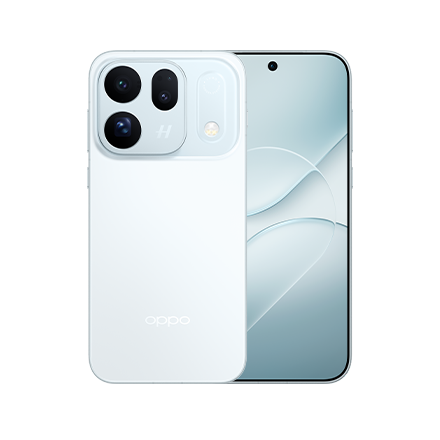
For anyone searching for a zoom camera phone with a periscope lens and crisp detail in India, the OPPO Find X9 Ultra takes a hardware-led approach. Its New-generation Hasselblad Master Camera System includes both a 200MP 3x telephoto camera and a 50MP 10x optical ultra-telephoto camera, giving photographers two distinct long-range options rather than relying on one zoom point for every scene.
Why a Periscope Lens Changes the Zoom Experience
A conventional smartphone camera has limited physical space between its lens and sensor. A periscope design changes the direction in which light travels inside the phone, creating a longer optical path without requiring a thick protruding lens.
The OPPO Find X9 Ultra takes this further with its Quintuple Prism Periscope Structure. Light is reflected five times before reaching the 10x ultra-telephoto sensor.
The 10x camera features:
- 50MP resolution
- f/3.5 aperture
- 11° field of view
- Autofocus
- 2-axis OIS
- Approximately 230mm equivalent focal length
That optical reach matters when the composition depends on something genuinely distant. Instead of making every photograph wider and cropping afterwards, photographers have a dedicated focal length for isolating far-away details
Not Every Distant Subject Needs 10x
Long-range photography becomes more practical when there is an intermediate focal length. The OPPO Find X9 Ultra therefore pairs its 10x camera with a 200MP 3x telephoto camera featuring an f/2.2 aperture, 34° field of view, autofocus and 2-axis OIS.
Think of the two cameras as serving different distances. The 3x telephoto is useful when the subject is clearly separated from you but still part of the surrounding scene. Street details, candid portraits, market displays or activity across a courtyard can fit naturally here. The 10x ultra-telephoto becomes more relevant when distance itself defines the shot. A detail on a distant building, wildlife that should not be approached, or action viewed from well outside the immediate area can benefit from the tighter framing.
That makes the OPPO Find X9 Ultra more flexible than treating zoom simply as a number on a slider.
At High Magnification, Stability Becomes Part of Image Quality
Every small hand movement becomes more visible as magnification increases. This is why optical reach alone does not determine whether a phone belongs in the best zoom camera phone conversation.
Both telephoto cameras on the OPPO Find X9 Ultra feature 2-axis OIS. The 10x ultra-telephoto also works with OPPO's Telephoto Sensor Shift technology to support more stable handheld capture at longer focal lengths. This matters particularly when there is no tripod available and the photographer has only a few seconds to frame the subject.
The wider imaging system adds further flexibility. The 200MP main camera features an f/1.5 aperture and 2-axis OIS, while a 50MP ultra-wide camera with a 123° field of view covers the opposite end of the composition range.
Across the system, OPPO's LUMO Imaging Engine handles computational image processing, while Hasselblad imaging modes provide additional options for colour and creative control.
Crisp Detail Also Needs a Screen You Can Check Outdoors
Long-range photographs often need a quick review. Did autofocus land correctly? Is the small detail actually visible? Should the composition be tightened before leaving the location?
The OPPO Find X9 Ultra uses a 17.32cm QHD+ AMOLED flat display with a resolution of 3168 × 1440 pixels, 510 PPI and a 1 to 120Hz adaptive refresh rate. It reaches up to 3600 nits peak (outdoor/HBM-boost), which is particularly relevant when checking photographs in bright outdoor environments.
For longer photography sessions, the phone combines a 7,050mAh silicon-carbon battery with 100W SUPERVOOC wired charging and 50W AIRVOOC wireless charging.
Conclusion
The useful question in smartphone zoom photography is not simply how far a camera can zoom. It is whether the phone provides the optical hardware, stabilisation and focal-length choices needed to make that extra reach practical.
With a 200MP 3x telephoto, a 50MP 10x optical ultra-telephoto, the Quintuple Prism Periscope Structure and optical stabilisation across both telephoto cameras, the OPPO Find X9 Ultra gives photographers several ways to approach distant subjects.
For those who compare the best zoom camera phone in India, that combination of optical reach and usable focal lengths is more meaningful than digital magnification alone.
Frequently Asked Questions
Q1: Does the OPPO Find X9 Ultra have a real periscope zoom camera?
Yes. Its 50MP 10x ultra-telephoto camera uses a Quintuple Prism Periscope Structure that reflects light five times within the camera module.
Q2: What is the difference between the 3x and 10x telephoto cameras?
The 200MP 3x telephoto is better suited to medium-distance framing, while the 50MP 10x ultra-telephoto provides substantially tighter framing for more distant subjects.
Q3: Does the 10x camera have optical stabilisation?
Yes. The 10x ultra-telephoto supports 2-axis OIS and also works with Telephoto Sensor Shift technology.
Q4: Which OPPO Find X9 Ultra camera should I use for architecture?
It depends on distance and composition. The main camera works well when the whole structure matters, 3x can isolate sections of a building, and 10x provides tighter framing for distant details.
Q5: Is megapixel count the only thing that matters for zoom photography?
No. Optical design, focal length, stabilisation, autofocus and image processing all contribute to the final result.