





Can a Phone Handle Serious Video Production? Inside the OPPO Find X9 Ultra Creator Workflow
Can a Phone Handle Serious Video Production? Inside the OPPO Find X9 Ultra Creator Workflow
A phone can record a technically sharp video and still leave creators with limited options once the footage reaches the edit. Professional-looking content depends not only on resolution, but also on colour, exposure, lens choice, motion and the ability to maintain a consistent workflow from capture to post-production.
That distinction is relevant to a growing range of mobile projects. A small team may be shooting a product story for social media, a creator may want to produce a short narrative sequence, or a business may need polished online content without building every shoot around a conventional cinema camera.
For users searching for the best camera phone for video in India, the OPPO Find X9 Ultra is notable because its creator tools extend beyond standard 4K recording. The camera system combines Hasselblad imaging with 8K 30fps 10-bit Log, O-Log2, ACES-supported colour handling, 4K 120fps Dolby Vision and LUT tools.
What separates professional-looking video from ordinary phone footage?
Resolution is often the easiest specification to compare, but it represents only the capture stage. Once footage is intended for colour grading or a multi-shot production, consistency becomes more important.
The OPPO Find X9 Ultra supports 8K recording at 30fps, including OPPO's 10-bit Log workflow. Its O-Log2 mode is designed to provide wider dynamic-range and colour-gamut information for grading, while the ACES-certified colour pipeline is intended to support consistency from capture through editing.
For motion-focused sequences, the rear camera supports 4K 120fps Dolby Vision, giving creators another way to capture movement for more deliberate edits. This is where the OPPO Find X9 Ultra becomes more relevant to creators who edit their footage rather than immediately posting every clip straight from the camera.
How can multiple focal lengths help with short-form storytelling?
A short video still needs visual grammar. Wide shots establish a setting; closer perspectives direct attention; telephoto framing can isolate a person, product or distant detail.
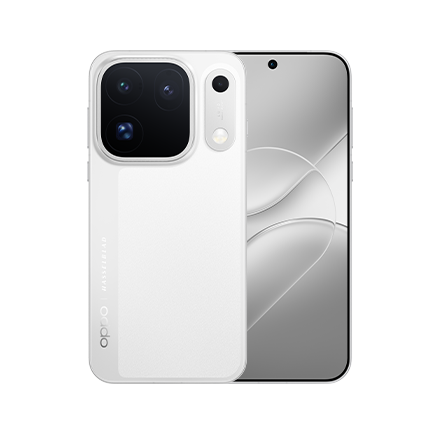
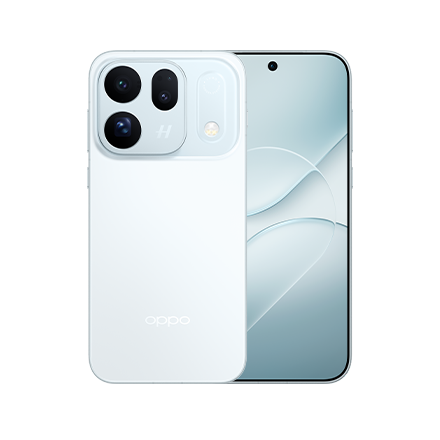
The New-generation Hasselblad Master Camera System includes a 50MP ultra-wide, 200MP main, 200MP 3x telephoto and 50MP 10x optical-zoom telephoto. The main, 3x and 10x cameras support 2-axis OIS.
For an Indian creator producing a short narrative piece, that range can reduce the need to make every scene look as if it came from the same camera position. A wider lens may establish the location, the main camera can cover general action, and telephoto perspectives can create tighter inserts or character-focused frames.
The same principle applies to product content. A fashion, food, jewellery or consumer-electronics video may need a combination of environment, presenter and detail shots to communicate clearly.
This does not make a phone equivalent to every dedicated production camera. It does, however, give small mobile crews more framing choices before digital cropping becomes the main way to vary composition.
Where does the TILTA KHRONOS Kit fit into mobile production?
One reason to shoot on a phone is portability, so adding accessories to every recording would defeat part of the appeal. More structured productions are different: repeated takes, outdoor exposure and longer recording sessions can make physical tools more valuable.
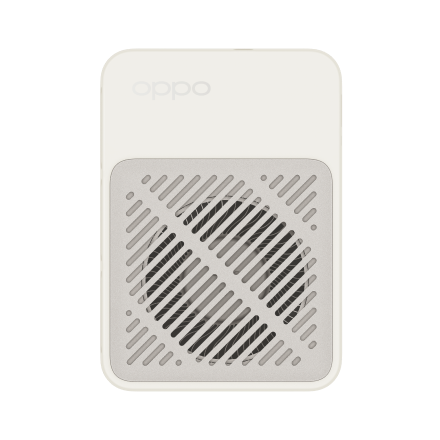
OPPO India confirms that the OPPO Find X9 Ultra is compatible with the optional TILTA KHRONOS Kit, comprising a focus handle, cooling back clip and ND filter adapter. The kit is sold separately.
For a creator making short-form narrative content or a planned product video, the focus handle can provide a more camera-like physical interface. The ND filter adapter is relevant to exposure management in brighter environments, while the cooling back clip adds another tool for demanding recording sessions.
This creates two possible workflows: carry the phone alone for spontaneous capture, or build it into a compact filmmaking setup when the production requires more control.
What role do LUTs and O-Log2 play after filming?
Footage intended for post-production often needs a different starting point from footage designed to be shared immediately.
O-Log2 gives creators a Log recording option, while OPPO's LUT tools allow compatible looks to be previewed in real time or burned into footage. The phone includes three tuned presets and support for custom Cube LUT imports according to the OPPO India product page.
For experienced creators, this can make the phone easier to integrate into an editing workflow. For casual users, these features do not need to be enabled at all as the standard video modes remain available.
That separation is useful because "professional video" should not mean making every recording more complicated. It means giving users additional control when their project actually needs it.
Performance, cooling and power for longer shoots
High-resolution recording creates sustained processing and thermal demand. OPPO pairs the Snapdragon 8 Elite Gen 5 Mobile Platform with its cooling approach, while the 7,050mAh typical battery supports longer creator sessions. The phone also supports 100W SUPERVOOC wired and 50W AIRVOOC wireless charging.
Storage is equally relevant when working with larger video files. The India configuration provides 12GB LPDDR5X RAM and 512GB UFS 4.1 storage. The 17.32 cm QHD+ AMOLED screen reaches up to 3600 nits peak (outdoor/HBM-boost) under OPPO's outdoor peak brightness specification, helping creators monitor framing in brighter environments.
Conclusion
Professional-looking smartphone video is increasingly defined by the workflow around the footage, not by resolution alone. The OPPO Find X9 Ultra combines 8K 30fps recording, O-Log2, an ACES-certified colour pipeline, 4K 120fps Dolby Vision and LUT support with a multi-focal-length Hasselblad camera system. Compatibility with the optional TILTA KHRONOS Kit extends that workflow further for creators who want physical controls and accessories.
For Indian creators producing product stories, short-form narrative content, branded social videos or more ambitious personal projects, the OPPO Find X9 Ultra offers a mobile production approach that can remain simple when needed and become more structured when the project demands it.
Frequently Asked Questions
Q1: Does the OPPO Find X9 Ultra support 8K video?
Yes. The rear camera supports 8K recording at 30fps.
Q2: What is O-Log2 useful for?
It is intended for creators who want greater flexibility when colour grading footage during post-production.
Q3: Does the OPPO Find X9 Ultra support ACES?
Yes. OPPO describes its video workflow as using an ACES-certified colour pipeline.
Q4: Can the OPPO Find X9 Ultra record 4K at 120fps?
Yes. It supports 4K at 120fps, including 4K 120fps Dolby Vision recording.
Q5: Is the TILTA KHRONOS Kit included with the phone?
No. OPPO states that it is an optional accessory kit that must be purchased separately.