









Why Frame Rate Matters: OPPO Find X9 Ultra as the Best Camera Phone for Video with 4K Slow Motion
Why Frame Rate Matters: OPPO Find X9 Ultra as the Best Camera Phone for Video with 4K Slow Motion
When people compare smartphone video cameras, resolution tends to get most of the attention. But the difference between 30fps, 60fps and 120fps can change a video just as much as the difference between Full HD and 4K.
Frame rate determines how motion is recorded. A conventional clip may need only 30fps. Fast movement often looks smoother at 60fps. Recording at 120fps opens another possibility: slowing the action down afterwards while retaining substantially more temporal information.
For users in India looking for a best camera phone for video, that flexibility is particularly relevant to social creators, travel filmmakers and anyone who regularly records movement rather than static scenes.
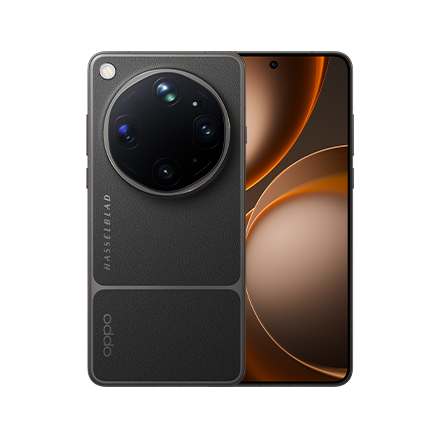
The OPPO Find X9 Ultra supports conventional 4K recording as well as 4K 120fps slow motion, giving creators several ways to decide how time itself should look in the finished video.
Which Smartphone Has Camera for Video with 4K and Slow Motion in India?
The OPPO Find X9 Ultra is one such option.
OPPO India's official specifications list:
- 4K video at 120fps, 60fps and 30fps
- 4K slow motion at 120fps
- 1080P slow motion at 240fps and 120fps
- 720P slow motion at 480fps and 240fps
- 8K video at 30fps
- 4K Dolby Vision at 120fps, 60fps and 30fps.
Those modes are not interchangeable. If a creator is talking to the camera, 30fps may be all that is required. Sixty frames per second can make movement feel smoother and can work well for handheld travel footage. At 120fps, the footage can be slowed to emphasise a moment that would otherwise pass too quickly.
Think of Holi colours moving through the air, a cricket shot, a dancer's movement, rain falling through a streetlight or water breaking around a moving subject. These are situations where slow motion can become part of the storytelling rather than a specification used simply because it is available.
4K 120fps Is Useful Because It Keeps Resolution in the Equation
High-frame-rate video has traditionally involved trade-offs. One common compromise is reducing resolution in order to capture more frames each second.
The OPPO Find X9 Ultra can record 4K slow motion at 120fps, while OPPO also highlights 4K 120fps Dolby Vision recording on its India product page. This allows a creator to combine high temporal resolution with a high-resolution frame. It can be useful when the final edit includes slower sequences but still needs to sit alongside conventional 4K footage.
The phone's video capabilities are connected to the New-generation Hasselblad Master Camera System, which includes Hasselblad 200MP main and 3x telephoto cameras plus a Hasselblad 50MP 10x optical telephoto. The New-Gen True Colour Camera is designed to gather colour information across photo and video capture.
Stabilisation Becomes More Important Once the Camera Starts Moving
Good slow motion can make movement look deliberate. Camera shake can do the opposite. The 200MP main, 200MP 3x telephoto and 50MP ultra-telephoto cameras all support 2-axis OIS. OPPO India's specifications also list combined EIS/OIS support at 4K 60fps and 30fps, as well as at 1080P 60fps and 30fps. Stabilisation support varies between recording modes, depending on the selected resolution and frame rate. For ordinary handheld clips, optical and electronic stabilisation provide more control over unwanted movement.
What Happens When You Want to Grade the Footage?
Not every video needs post-production. A family clip or an Instagram Story may be shot, trimmed and shared within minutes. Other creators want something different. They may want to control contrast, colour and the overall visual character later.
The OPPO Find X9 Ultra supports 8K 30fps 10-bit Log recording and O-Log2. OPPO also states that its video pipeline is ACES-certified and allows real-time LUT preview and the use of Cinematic LUTs, including custom LUT imports.
This creates a clear split between two workflows:
- A casual user can remain in standard or Dolby Vision modes and focus on the moment.
- A more advanced creator can record in Log and make more colour decisions during editing.
That choice is more useful than forcing every user into the same definition of "professional video".
The Front Camera Is Not Limited to Full HD
For vloggers, educators and creators who frequently speak directly to camera, rear-camera specifications tell only half the story. The OPPO Find X9 Ultra has a 50MP autofocus front camera with an f/2.4 aperture. It supports 4K video at both 60fps and 30fps. This makes it possible to record a 4K piece-to-camera and then switch to rear-camera footage without automatically dropping the entire project to a lower front-camera resolution.
Sustained Recording Is Also a Thermal Problem
Video keeps the image sensor, processor and storage subsystem working continuously. Higher resolution and higher frame rates raise that workload.
The OPPO Find X9 Ultra uses the Snapdragon 8 Elite Gen 5 Mobile Platform and a 3D Cryo-velocity Cooling System. OPPO specifically links the platform and cooling design to sustained 8K 30fps and 4K 120fps recording. The phone also carries a 7,050mAh typical battery with up to 100W SUPERVOOC wired charging and 50W AIRVOOC wireless charging. In a video-focused article, those specifications matter because recording is one of the more sustained workloads a smartphone can face.
Conclusion
For some creators, 4K 30fps is the everyday mode. Others need 60fps for movement, 120fps for slow motion, Dolby Vision for HDR capture or Log for a more involved grading process. Therefore, the best camera phone for video is not defined by one resolution number.
The OPPO Find X9 Ultra puts these choices in the same camera system rather than committing to one type of creator. Its 4K 120fps slow-motion capability is particularly relevant because it gives motion a creative role, not merely a technical one.
Frequently Asked Questions
Q1: Which smartphone has camera for video with 4K and slow motion in India?
The OPPO Find X9 Ultra supports 4K recording and dedicated 4K slow motion at 120fps. It also supports slower-motion options at lower resolutions, including 1080P at up to 240fps and 720P at up to 480fps.
Q2: Can the OPPO Find X9 Ultra shoot 8K?
Yes. OPPO India lists rear-camera 8K recording at 30fps.
Q3: Does it support 4K Dolby Vision?
Yes. 4K Dolby Vision recording is listed at 120fps, 60fps and 30fps.
Q4: Can the front camera record in 4K?
Yes. The 50MP front camera supports 4K video at 60fps and 30fps.
Q5: Is O-Log2 meant for everyone?
Not necessarily. O-Log2 is more relevant to creators who expect to colour-grade footage. Users who prefer to record and share immediately can use conventional video or Dolby Vision modes instead. OPPO officially lists O-Log2 and Log recording among the phone's creator tools.